 지반 보호
표준 플라스틱 깔판
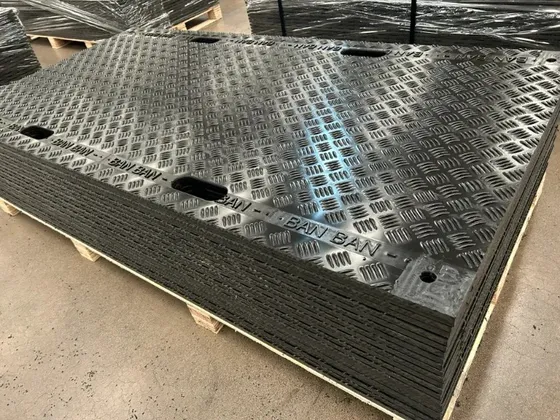
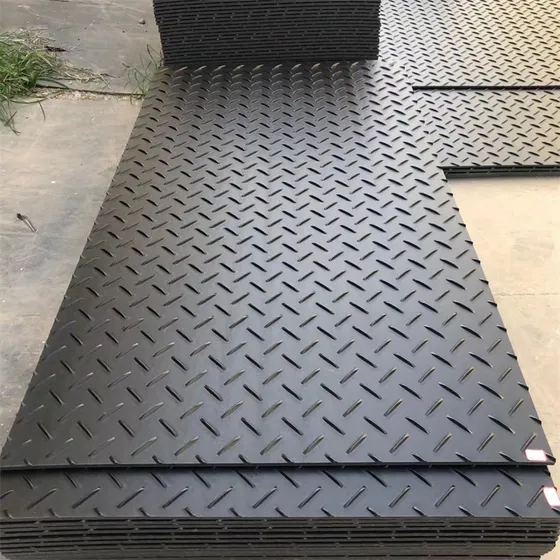
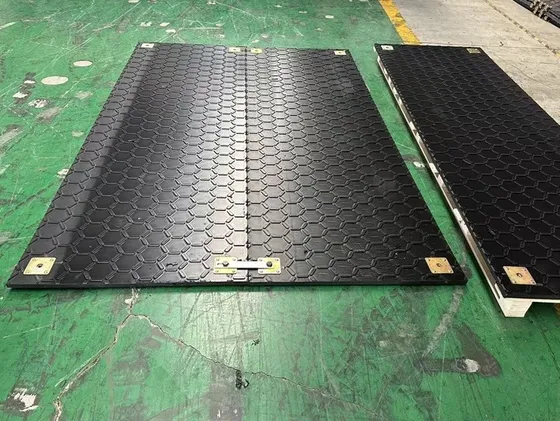
현장에서 가장 널리 쓰이는 4×8 ft 공사용 깔판 — 검정 HDPE 플라스틱 깔판, 양면 트레드, 손으로 운반, 여러 해 재사용.
- 4×8 ft
- 1/2 in
- ~37 kg
2026-08-18 · SIGMA 기술팀
What shikiita sizes mean in millimetres, how plastic (plashiki) compares with steel plate, and what actually drives the price of a plastic ground protection board.
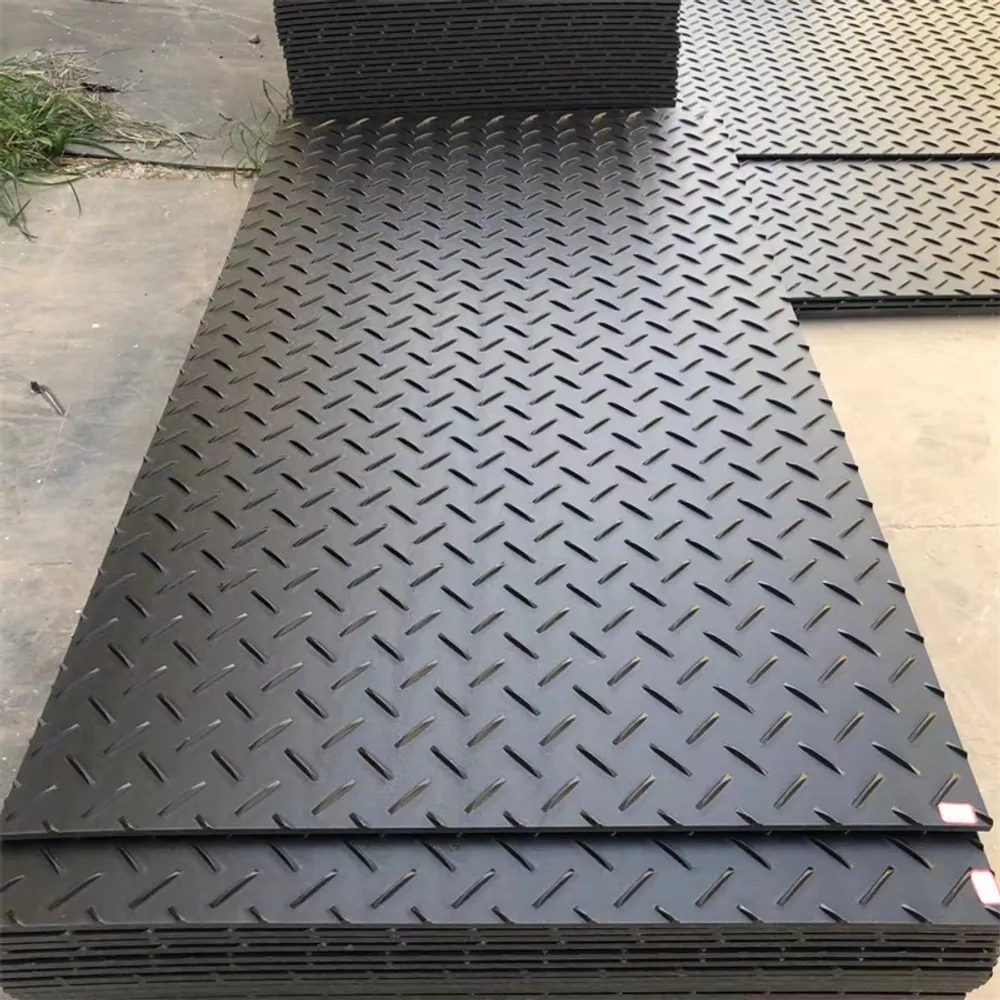
In the Japanese construction and equipment-rental market, a ground protection board laid under tyres, tracks, or outrigger feet is called shikiita (敷板). When the board is resin rather than steel, it is often shortened to plashiki (プラシキ) — plastic shikiita. Both terms describe the same job an English-speaking buyer would call a ground protection mat or a temporary roadway panel: a flat, load-spreading board laid down to protect the surface underneath and give equipment a stable footing.
Japanese shikiita is sold to two traditional sizes carried over from timber board dimensions: 3-shaku by 6-shaku, which comes out to 910 x 1820 mm, and 4-shaku by 8-shaku, at 1219 x 2438 mm. Both sizes map directly onto standard international ground protection panel dimensions — the 4 x 8 ft class covers the 4-shaku by 8-shaku size almost exactly, which is why a standard ground protection mat built to the common 4 x 8 ft spec drops straight into a site plan written around plashiki sizing without any resizing needed. The 3 x 6 shaku size is the lighter, easier-to-handle option for tighter spaces where a crew is moving boards by hand.
Steel shikiita (敷鉄板) has been the traditional standard for decades, and it still wins on raw point-load capacity in a fixed location. But it comes with real handling costs: a steel plate the size of a 4 x 8 ft panel is heavy enough that laying and lifting it needs a crane or a forklift, it rusts if left outdoors, and a wet steel surface is genuinely slippery underfoot. A plastic board of the same footprint weighs a fraction as much, so a two-person crew moves it by hand, it will not rust, and a treaded surface keeps traction wet or dry. For repeated relocation across a site, or anywhere the board has to double as a walking surface, plastic overtakes steel even though steel still holds the edge on the very heaviest static point loads.
Three factors set the price of a plastic board, not the brand name on it: total surface area, thickness, and quantity ordered. A thicker board built for heavier equipment costs more per panel than a thin board meant for pedestrian and light-vehicle traffic, and area scales the cost close to linearly — a 4 x 8 ft panel costs roughly double a 3 x 6 ft panel of the same thickness. Buying in volume for a full site or a rental fleet brings the per-panel cost down meaningfully compared with ordering a handful of boards at a time, which is where working directly with a factory rather than a small local supplier makes the biggest difference.
Pick 3 x 6 shaku (910 x 1820 mm) for tight access, hand-carried jobs, and any spot where a crew needs to lay boards without machinery. The 4 x 8 shaku (1219 x 2438 mm) size — matched almost exactly by our standard ground protection mat — covers most haul-route and equipment-track work with fewer joints per metre than the smaller board. For a longer continuous road built from larger panels rather than hand-laid boards, a temporary roadway panel steps up the footprint again. Most working sites end up mixing sizes: the larger board for the main route, the smaller one for tight corners the larger board cannot reach.
장비 톤수, 지반 조건, 수량 및 도착항을 알려주시면 1영업일 이내에 회신해 드립니다.
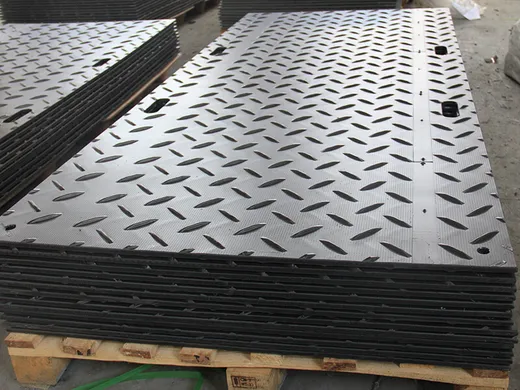
크레인 매트 표준 규격 설명 — 일반적인 패널 크기, 두께와 하중의 관계, HDPE 크레인 매트와 목재의 규격 비교.
자세히 보기 →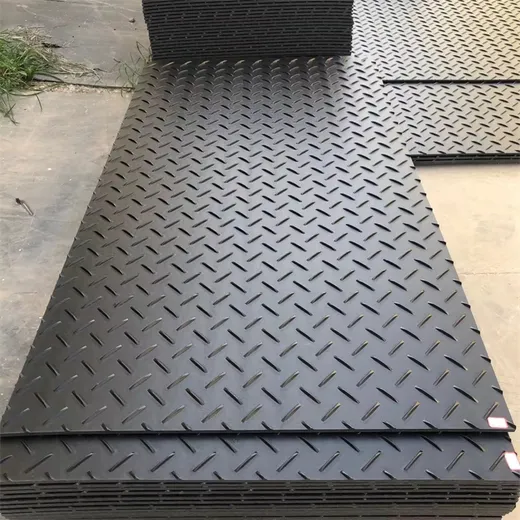
어떤 장비에 어떤 바닥 보호 매트가 맞는지 장비별로 정리한 현장 가이드. 크레인에는 아웃리거 받침판, 굴착기·도저에는 트랙 매트, 무른 지반을 다니는 트럭에는 진입 매트와 임시 도로 매트를 쓴다.
자세히 보기 →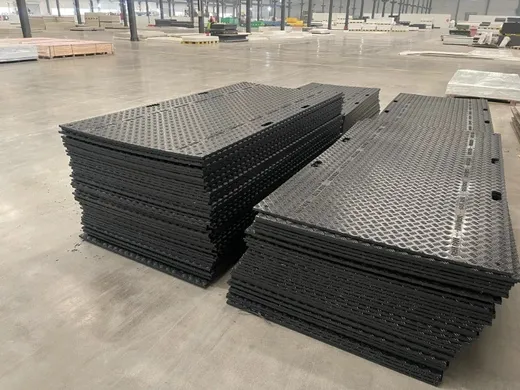
하중 등급에 따라 바닥 보호 매트와 진입 매트를 고르는 실무자용 가이드. 경량·중간·중장비용 HDPE 매트를 하중 범위, 두께, 지반 조건, 대표 용도까지 하나의 비교표로 정리하고, 구매자 체크리스트와 FAQ를 함께 담았습니다.
자세히 보기 →