
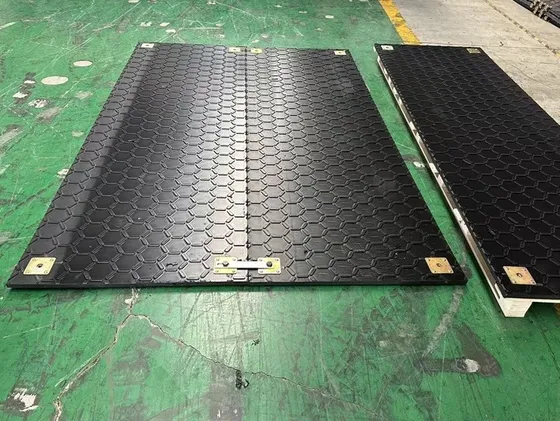
 Protezione del suolo
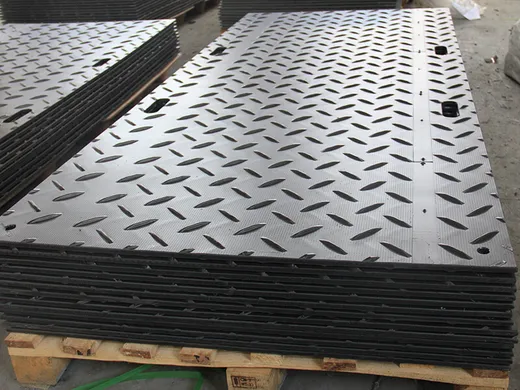
Piastra carrabile standard in HDPE 4×8
La lastra carrabile da 4×8 ft per uso quotidiano — HDPE nero, battistrada reversibile, posa a mano, riutilizzabile per anni.
- 4×8 ft
- 1/2 in
- ~37 kg
2026-08-18 · Team Tecnico SIGMA
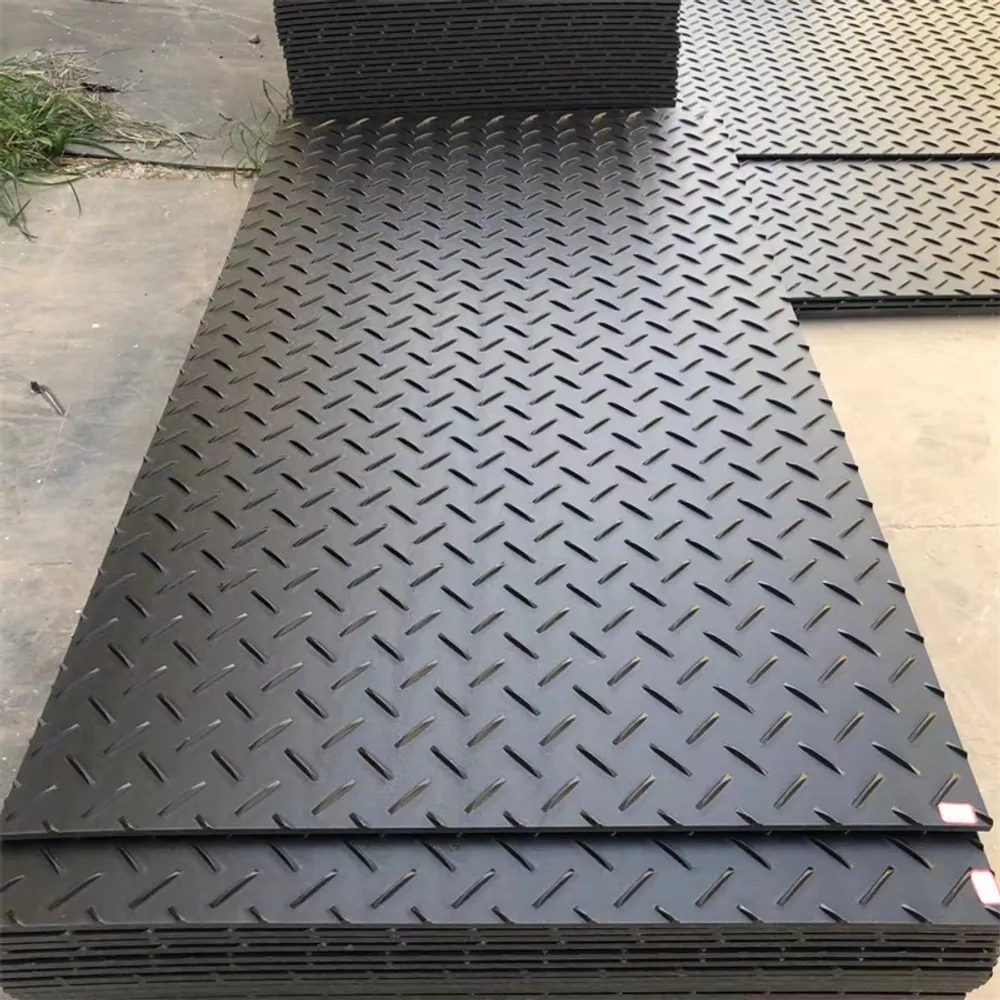
What shikiita sizes mean in millimetres, how plastic (plashiki) compares with steel plate, and what actually drives the price of a plastic ground protection board.
In the Japanese construction and equipment-rental market, a ground protection board laid under tyres, tracks, or outrigger feet is called shikiita (敷板). When the board is resin rather than steel, it is often shortened to plashiki (プラシキ) — plastic shikiita. Both terms describe the same job an English-speaking buyer would call a ground protection mat or a temporary roadway panel: a flat, load-spreading board laid down to protect the surface underneath and give equipment a stable footing.
Japanese shikiita is sold to two traditional sizes carried over from timber board dimensions: 3-shaku by 6-shaku, which comes out to 910 x 1820 mm, and 4-shaku by 8-shaku, at 1219 x 2438 mm. Both sizes map directly onto standard international ground protection panel dimensions — the 4 x 8 ft class covers the 4-shaku by 8-shaku size almost exactly, which is why a standard ground protection mat built to the common 4 x 8 ft spec drops straight into a site plan written around plashiki sizing without any resizing needed. The 3 x 6 shaku size is the lighter, easier-to-handle option for tighter spaces where a crew is moving boards by hand.
Steel shikiita (敷鉄板) has been the traditional standard for decades, and it still wins on raw point-load capacity in a fixed location. But it comes with real handling costs: a steel plate the size of a 4 x 8 ft panel is heavy enough that laying and lifting it needs a crane or a forklift, it rusts if left outdoors, and a wet steel surface is genuinely slippery underfoot. A plastic board of the same footprint weighs a fraction as much, so a two-person crew moves it by hand, it will not rust, and a treaded surface keeps traction wet or dry. For repeated relocation across a site, or anywhere the board has to double as a walking surface, plastic overtakes steel even though steel still holds the edge on the very heaviest static point loads.
Three factors set the price of a plastic board, not the brand name on it: total surface area, thickness, and quantity ordered. A thicker board built for heavier equipment costs more per panel than a thin board meant for pedestrian and light-vehicle traffic, and area scales the cost close to linearly — a 4 x 8 ft panel costs roughly double a 3 x 6 ft panel of the same thickness. Buying in volume for a full site or a rental fleet brings the per-panel cost down meaningfully compared with ordering a handful of boards at a time, which is where working directly with a factory rather than a small local supplier makes the biggest difference.
Pick 3 x 6 shaku (910 x 1820 mm) for tight access, hand-carried jobs, and any spot where a crew needs to lay boards without machinery. The 4 x 8 shaku (1219 x 2438 mm) size — matched almost exactly by our standard ground protection mat — covers most haul-route and equipment-track work with fewer joints per metre than the smaller board. For a longer continuous road built from larger panels rather than hand-laid boards, a temporary roadway panel steps up the footprint again. Most working sites end up mixing sizes: the larger board for the main route, the smaller one for tight corners the larger board cannot reach.
Indicaci tonnellaggio del mezzo, tipo de terreno, quantità e porto di destinazione — risposta entro 1 giorno lavorativo.
Protezione del suolo La lastra carrabile da 4×8 ft per uso quotidiano — HDPE nero, battistrada reversibile, posa a mano, riutilizzabile per anni.
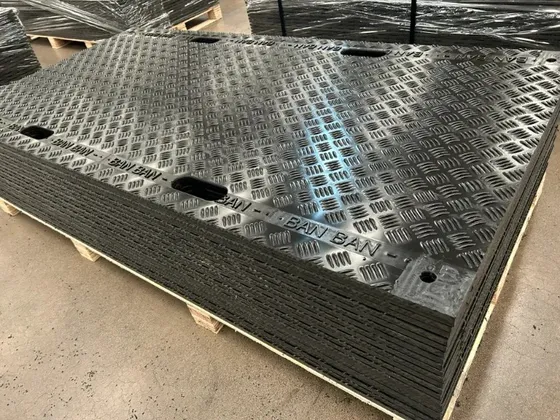 Uso intensivo
Piastra carrabile pesante da 4×8 ft più spessa e densa per camion carichi, apripista ed escavatori.
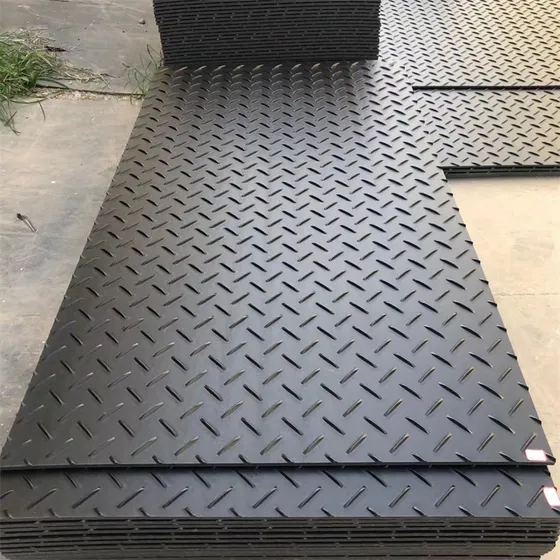 Pannelli stradali
Pannello carrabile di grande formato per strade d'accesso pesanti istantanee.
Misure e dimensioni standard delle piastre per gru spiegate — formati di pannello comuni, come lo spessore si lega al carico, e HDPE contro legno per il dimensionamento.
Leggi →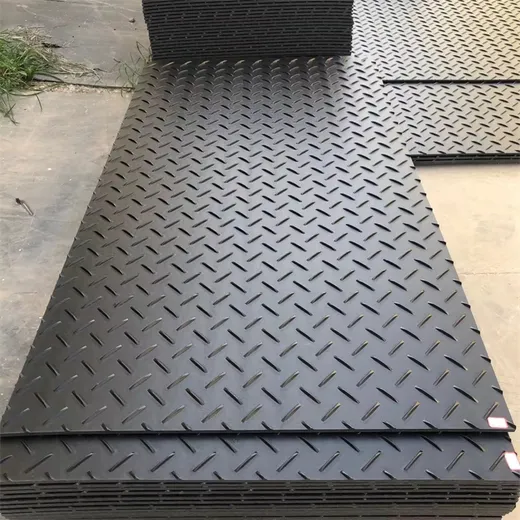
Una guida di cantiere per attrezzatura: quale lastra carrabile serve a ogni macchina — piastre per stabilizzatori gru per le gru, piastre per i cingoli di escavatori e apripista, lastre d'accesso e piastre carrabili per i camion sul terreno molle.
Leggi →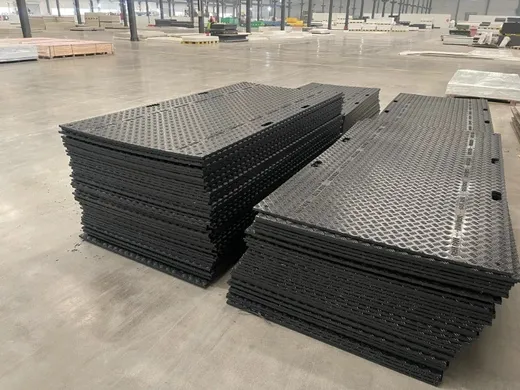
La guida del progettista per scegliere lastre carrabili e lastre d’accesso in base alla classe di portata. Confronta le lastre in HDPE leggere, medie e pesanti — portata, spessore, condizioni del terreno e applicazioni tipiche — in un’unica tabella di riferimento, con una checklist per l’acquirente e le FAQ.
Leggi →