
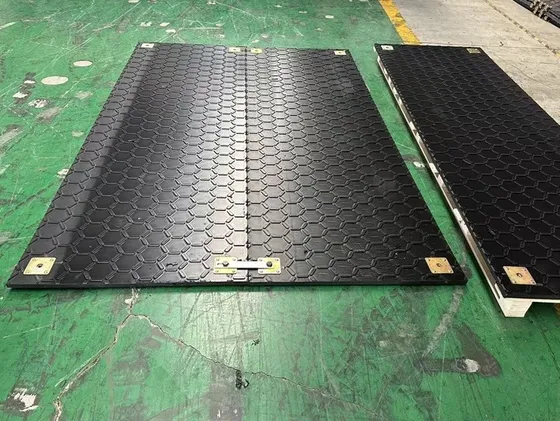
 Protection de sol
Plaque de roulage standard
La plaque de roulage chantier 4×8 ft en HDPE noir — bande réversible, manuportable, réutilisable des années.
- 4×8 ft
- 1/2 in
- ~37 kg
2026-08-18 · Équipe technique SIGMA
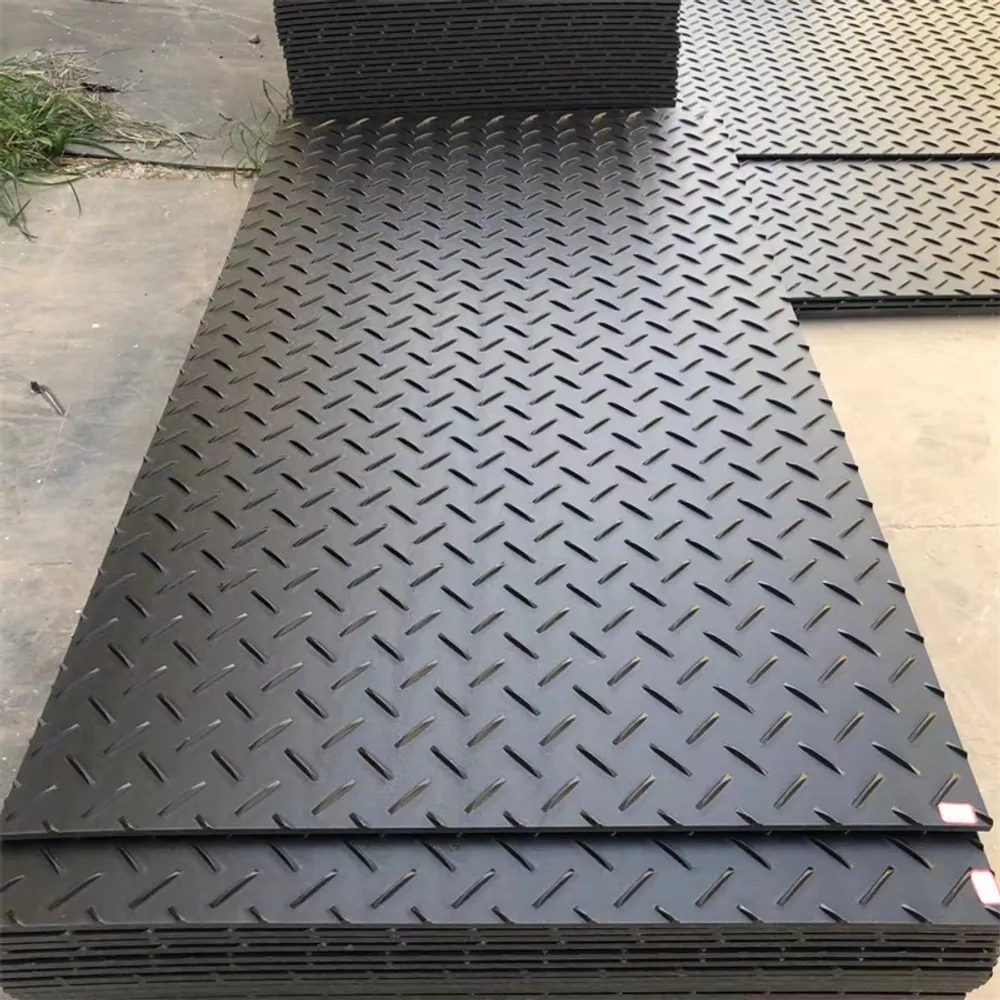
What shikiita sizes mean in millimetres, how plastic (plashiki) compares with steel plate, and what actually drives the price of a plastic ground protection board.
In the Japanese construction and equipment-rental market, a ground protection board laid under tyres, tracks, or outrigger feet is called shikiita (敷板). When the board is resin rather than steel, it is often shortened to plashiki (プラシキ) — plastic shikiita. Both terms describe the same job an English-speaking buyer would call a ground protection mat or a temporary roadway panel: a flat, load-spreading board laid down to protect the surface underneath and give equipment a stable footing.
Japanese shikiita is sold to two traditional sizes carried over from timber board dimensions: 3-shaku by 6-shaku, which comes out to 910 x 1820 mm, and 4-shaku by 8-shaku, at 1219 x 2438 mm. Both sizes map directly onto standard international ground protection panel dimensions — the 4 x 8 ft class covers the 4-shaku by 8-shaku size almost exactly, which is why a standard ground protection mat built to the common 4 x 8 ft spec drops straight into a site plan written around plashiki sizing without any resizing needed. The 3 x 6 shaku size is the lighter, easier-to-handle option for tighter spaces where a crew is moving boards by hand.
Steel shikiita (敷鉄板) has been the traditional standard for decades, and it still wins on raw point-load capacity in a fixed location. But it comes with real handling costs: a steel plate the size of a 4 x 8 ft panel is heavy enough that laying and lifting it needs a crane or a forklift, it rusts if left outdoors, and a wet steel surface is genuinely slippery underfoot. A plastic board of the same footprint weighs a fraction as much, so a two-person crew moves it by hand, it will not rust, and a treaded surface keeps traction wet or dry. For repeated relocation across a site, or anywhere the board has to double as a walking surface, plastic overtakes steel even though steel still holds the edge on the very heaviest static point loads.
Three factors set the price of a plastic board, not the brand name on it: total surface area, thickness, and quantity ordered. A thicker board built for heavier equipment costs more per panel than a thin board meant for pedestrian and light-vehicle traffic, and area scales the cost close to linearly — a 4 x 8 ft panel costs roughly double a 3 x 6 ft panel of the same thickness. Buying in volume for a full site or a rental fleet brings the per-panel cost down meaningfully compared with ordering a handful of boards at a time, which is where working directly with a factory rather than a small local supplier makes the biggest difference.
Pick 3 x 6 shaku (910 x 1820 mm) for tight access, hand-carried jobs, and any spot where a crew needs to lay boards without machinery. The 4 x 8 shaku (1219 x 2438 mm) size — matched almost exactly by our standard ground protection mat — covers most haul-route and equipment-track work with fewer joints per metre than the smaller board. For a longer continuous road built from larger panels rather than hand-laid boards, a temporary roadway panel steps up the footprint again. Most working sites end up mixing sizes: the larger board for the main route, the smaller one for tight corners the larger board cannot reach.
Indiquez le tonnage de vos engins, la nature du sol, la quantité et le port de destination — réponse sous 24h ouvrées.
Protection de sol La plaque de roulage chantier 4×8 ft en HDPE noir — bande réversible, manuportable, réutilisable des années.
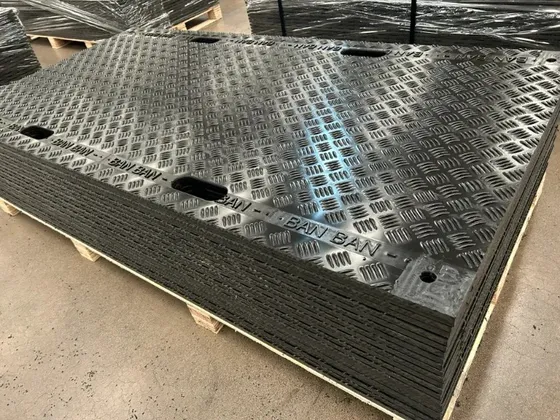 Usage intensif
Plaque de roulage 4×8 ft plus épaisse et dense pour camions chargés, bulldozers et pelles.
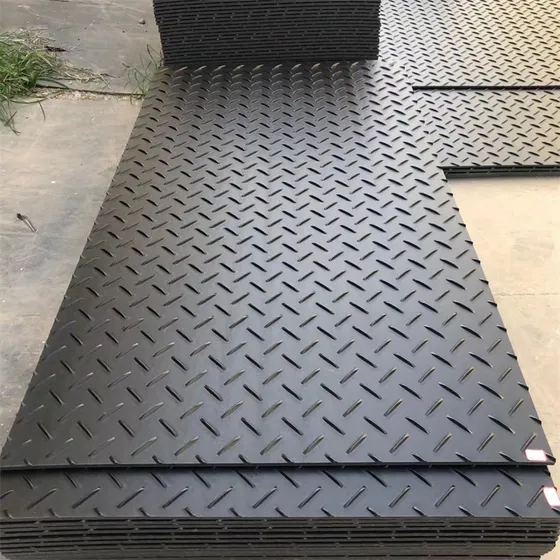 Panneaux de voirie
Plaque de roulage grand format pour routes d’accès lourdes instantanées — 828 psi.
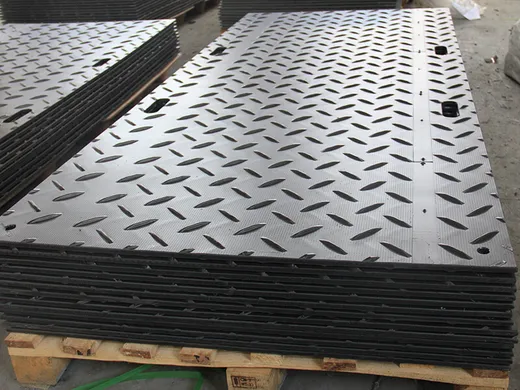
Tailles et dimensions standards des plaques de calage grue — formats courants, lien entre épaisseur et charge, et HDPE contre bois pour le dimensionnement.
Lire →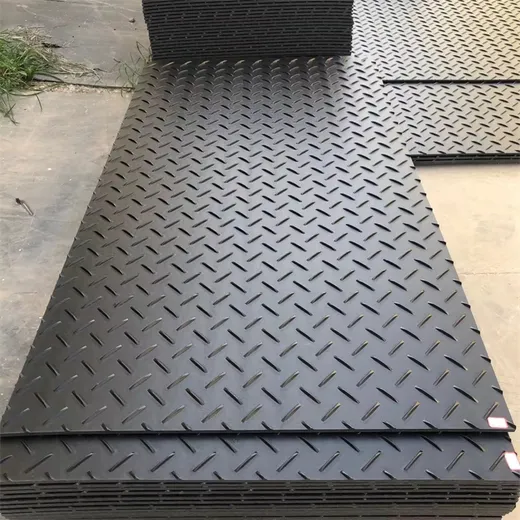
Un guide de chantier par engin : quelle plaque de roulage chaque machine réclame — plaques de calage pour les grues, plaques de roulage pour pelles et bulldozers, plaques d'accès et plaques de roulage grand format pour camions sur sol mou.
Lire →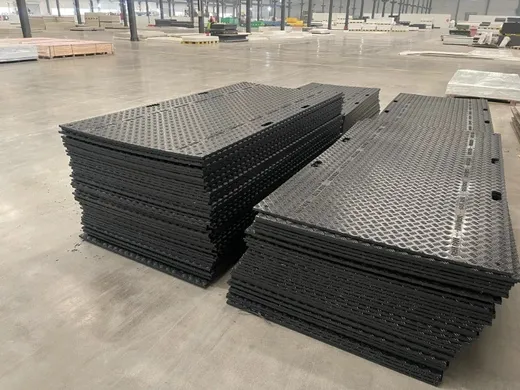
Le guide du prescripteur pour choisir plaques de roulage et plaques d’accès selon la classe de service. Comparez les plaques HDPE légères, moyennes et poids lourds — plage de charge, épaisseur, conditions de sol et applications types — dans un tableau de référence, avec une check-list acheteur et une FAQ.
Lire →