
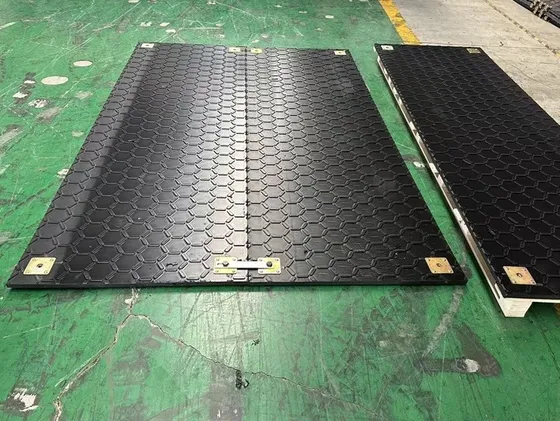
 Ground Protection
Standard Ground Protection Mat
The everyday 4×8 ft HDPE ground protection mat (12.7 mm, ~37 kg, up to 80 t load) — reversible dual-sided tread, two-person hand lift, reusable for years.
- 4×8 ft
- 1/2 in
- ~37 kg
2026-05-31 · SIGMA Technical Team
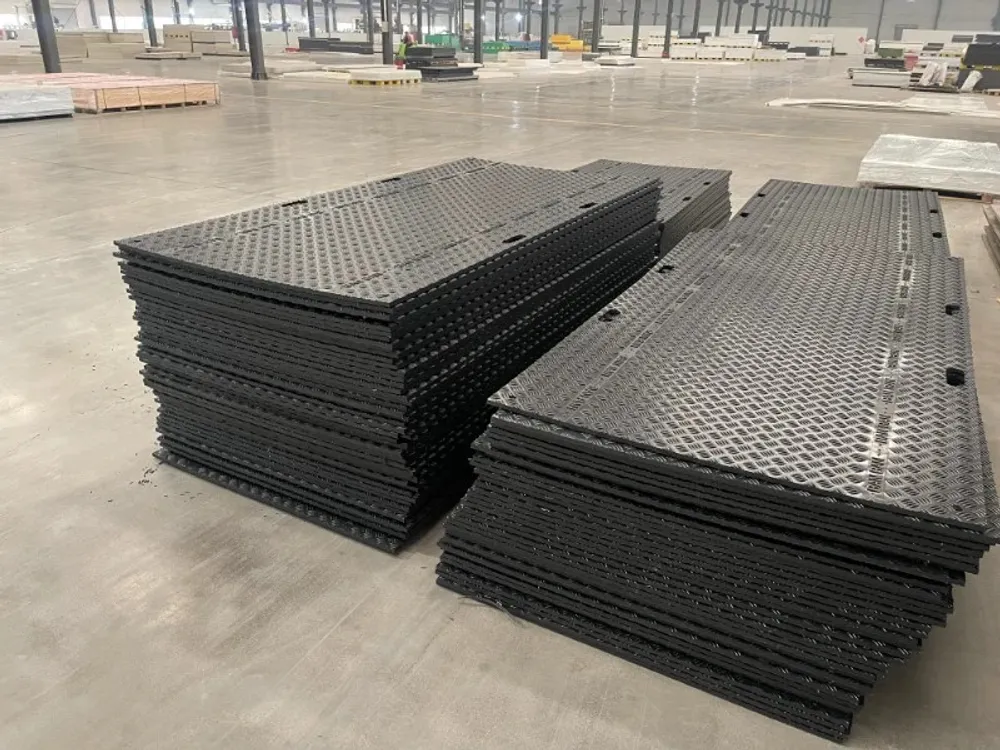
A specifier’s guide to choosing ground protection mats and access mats by duty class. Compare light, medium, and heavy-duty HDPE mats — load range, thickness, ground conditions, and typical applications — in one reference table, with a buyer’s checklist and FAQ.
Specifying ground protection mats comes down to one question asked in the right order: what load crosses the mat, over what ground, how often? Get that right and the mat spreads the load, the surface underneath survives, and the panels redeploy job after job. Get it wrong and a too-light mat over-flexes and punches in, or a too-heavy mat ties up budget and needs plant to handle. This guide sorts the whole category into three duty classes — light, medium, and heavy — so you can match a class to your job in one read, then drop to the exact product within it. It expands on our shorter walkthrough of how to choose the right ground protection mat with a full comparison table and a specifier’s checklist.
A structural ground protection mat is a portable polymer panel laid over soft, wet, or sensitive ground to create a stable, reusable working surface. Its job is to spread a concentrated wheel, track, or outrigger load across a wide footprint so the ground bearing pressure drops to a level the soil can carry. It does not improve the soil; bearing capacity still comes from the ground beneath, which is why every load figure assumes a competent, evenly prepared sub-grade. Modern access mats and temporary roadway panels are moulded from HDPE (high-density polyethylene), which is roughly 95% lighter than a steel plate of equal size, flexes under load and springs back without cracking, is non-conductive (a safety win on utility and electrical work), and is rot-proof, washable, and recyclable for a life measured in years rather than a single use.
The table below maps the three duty classes to load range, typical thickness and panel size, suitable ground, and the jobs each class is built for. Treat the tonnage figures as typical spread-load ranges over prepared ground for a competent surface — not point-load ratings under a single track grouser — and always size to the heaviest realistic point load with a safety margin.
| Duty class | Typical load range | Thickness | Common panel size | Ground & traffic | Typical applications |
|---|---|---|---|---|---|
| Light duty (turf / pedestrian) | Foot traffic & light vehicles up to ~5–8 t axle | ~8–12.7 mm (5/16–1/2 in) | 2x8 ft, 3x8 ft, 4x8 ft | Firm, prepared or grassed ground; low-frequency traffic | Event flooring, lawn & turf protection, pedestrian walkways, light landscaping access |
| Medium / standard duty | Cars, vans, and light plant up to ~20–40 t GVW | ~12.7–16 mm (1/2–5/8 in) | 4x8 ft (the industry default), 2x8 ft | Competent sub-grade to slightly soft ground; regular site traffic | General construction site access, temporary parking, utility & cable works, driveway protection |
| Heavy duty | Loaded trucks, dozers & tracked excavators, ~40–80+ t | ~16–25 mm (5/8–1 in) | 4x8 ft, plus larger 8x14 ft mats & bog mats | Soft, wet, or marginal ground; high-frequency or tracked traffic | Haul roads, crane & outrigger pads, oil & gas / pipeline access, drilling rig mats, bog mats over peat & marsh |
Read the ground first. On a firm, level sub-grade a standard (medium-duty) ground protection mat carries typical site traffic comfortably. As the ground softens you do not just get a thicker mat — you get a bigger footprint: over saturated soil, peat, or marsh you step up to a heavy-duty ground protection mat or an extra-heavy track mat (bog mat) to drop ground bearing pressure to what the soil can actually bear. Only then layer in the machine: tracked plant and concentrated outrigger loads need the heavy class even on decent ground, because the point load under a grouser or a crane leg is far higher than the average. The mechanics of that are covered in understanding ground protection mat load ratings, and crane work specifically in our outrigger pad sizing guide.
Construction site access is the medium-duty default — a 4x8 ft standard mat for site roads and working platforms, stepping to heavy duty for loaded haul routes; see ground protection mats for construction site access. Turf and event work is light duty: a clear turf protection mat lets light reach the grass for short-term cover, while a turf reinforcement grid reinforces a lawn for repeat traffic — more in protecting turf and landscaping. Oil & gas, pipeline, and utility access run heavy duty over remote, soft terrain, where HDPE’s non-conductive body is a safety advantage over steel. Equipment-rental fleets weigh duty class against utilisation and resale — the economics are in our buyer’s FAQ for rental fleets. Whatever the sector, the full range is on the applications page.
Before you order, run the panel against these six points:
The industry-standard panel is 4x8 ft (1.22 x 2.44 m). Light-duty turf and event mats also come in 2x8 ft and 3x8 ft, while heavy-duty access and bog mats run to 8x14 ft and larger for the biggest spread-load footprints.
It depends on the duty class and, critically, on the ground beneath. As a spread-load guide over prepared ground, light-duty mats suit foot traffic and light vehicles, medium-duty mats take cars, vans, and light plant, and heavy-duty mats carry loaded trucks and tracked excavators in the 40–80+ t range. The mat spreads the load — actual capacity is limited by the soil’s bearing strength, so a competent person should confirm conditions for critical loads.
The terms overlap. “Ground protection mat” usually means a lighter HDPE panel for site access and turf protection; “access mat” and “track mat” often imply heavier-duty panels — including timber or composite bog mats — for the softest ground and heaviest plant. By duty class, access/track/bog mats sit at the heavy-duty end of the same spectrum.
Yes. HDPE mats are designed for repeated use over many years: they wash down, resist rot and UV, do not corrode, and are recyclable at end of life — which is what makes them economical per use compared with single-use plywood or hired steel plate.
Tell us your equipment tonnage, ground condition, quantity, and destination port — we reply within one business day.
Ground Protection The everyday 4×8 ft HDPE ground protection mat (12.7 mm, ~37 kg, up to 80 t load) — reversible dual-sided tread, two-person hand lift, reusable for years.
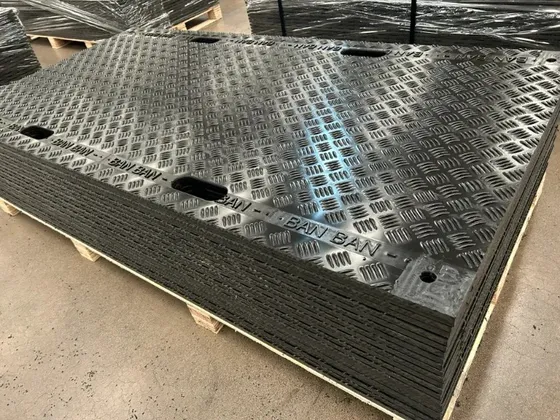 Heavy-Duty
Heavy-duty 4×8 ft HDPE ground protection mats (16–19 mm, ~50 kg) rated up to 120 t spread load for excavators, dozers, and loaded haul trucks.
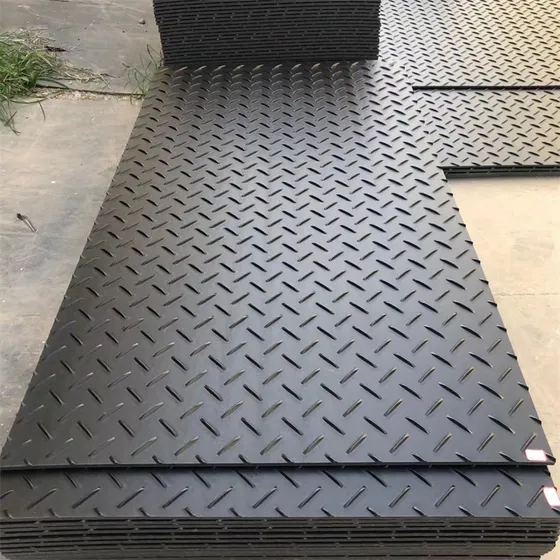 Roadway Panels
Large-format 2×4 m HDPE temporary roadway panels (~385 kg, 828 psi bearing) with overlapping flanges and locking pins for heavy site access roads.
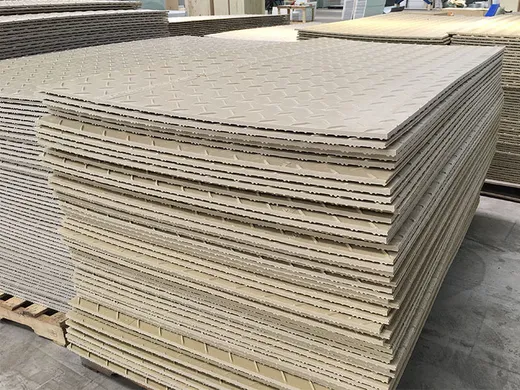
How to choose a plaque de roulage — matching thickness to load, the difference between a car-weight plate and a TP site plate, what drives the price, and why cheap or second-hand plates often cost more.
Read →
Why every jack, outrigger, and stabiliser leg needs a base plate underneath it, and how to pick the right size for cranes, aerial platforms, caravans, and scaffolding.
Read →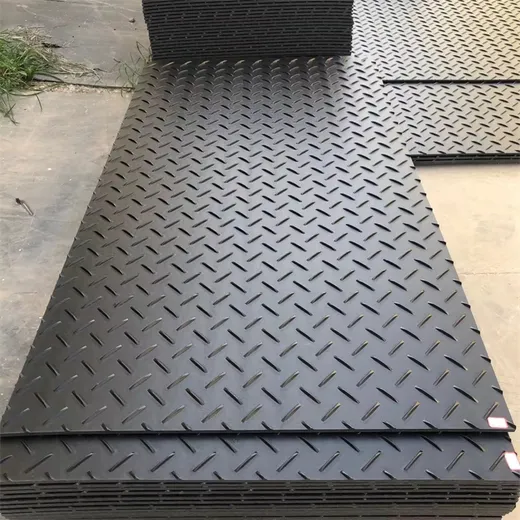
What shikiita sizes mean in millimetres, how plastic (plashiki) compares with steel plate, and what actually drives the price of a plastic ground protection board.
Read →