 지반 보호
표준 플라스틱 깔판
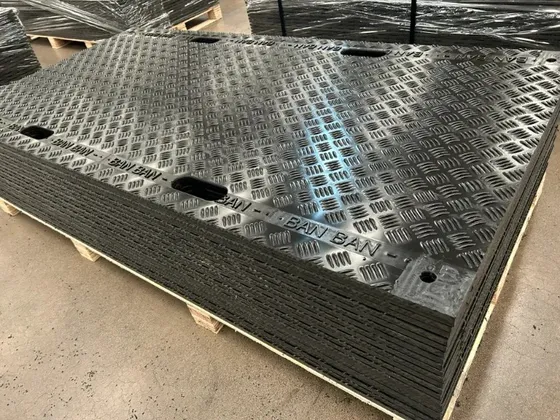
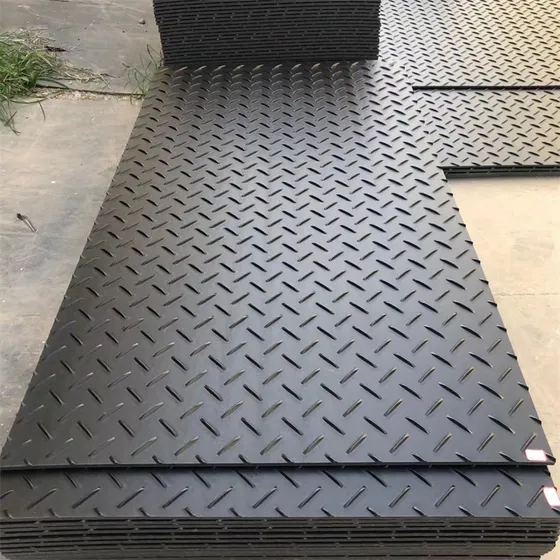
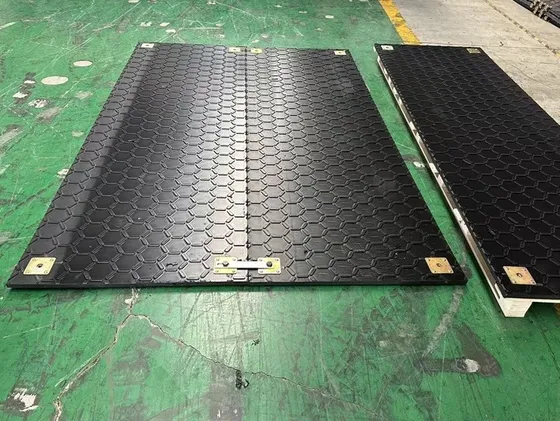
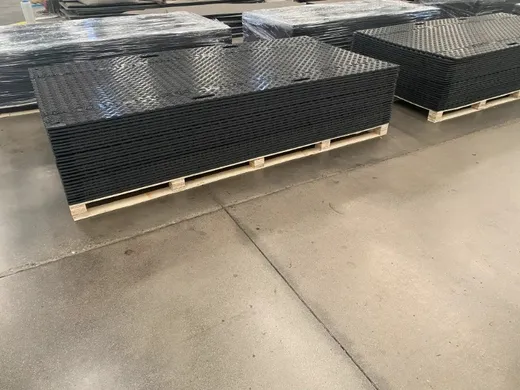
현장에서 가장 널리 쓰이는 4×8 ft 공사용 깔판 — 검정 HDPE 플라스틱 깔판, 양면 트레드, 손으로 운반, 여러 해 재사용.
- 4×8 ft
- 1/2 in
- ~37 kg
2026-08-19 · SIGMA 기술팀
Recovery boards and HDPE trackway solve two different soft-ground problems — one gets a stuck vehicle moving, the other stops it getting stuck. How they compare in mud, sand, and snow, and when to use each.
Soft ground gets dealt with in two ways, and confusing them wastes money. A recovery board — a plaque anti-enlisement in French — is a short, ridged board you wedge under a spinning wheel to regain traction and drive out. Trackway plates are large panels you lay before anything drives, so no wheel ever loses traction in the first place. One is a rescue tool carried in the vehicle; the other is a surface built for the route. A 4x4 crossing a beach needs the first. A site with lorries arriving every day needs the second.
Mud fails by shear: the wheel churns until it is sitting on slurry with no bearing left, so the fix is to spread the load over an area wide enough that the soil below stays intact. Sand fails by flow — grains move out from under the tyre, so what matters is a surface that does not let the wheel dig a bowl. Snow and frozen ground sit somewhere between the two and change through the day as they thaw. A ridged recovery board grips in all three but only across its own short length; a continuous plate run carries a vehicle across the whole soft section, which is why a route that is regularly driven ends up on trackway rather than on boards.
Recovery boards earn their place in vehicle kit: light, cheap, carried permanently, and the fastest way to free a stuck wheel when there is no plant nearby. They are a solution for the occasional crossing and for genuine emergencies. Their limit is exactly what makes them portable — they cover a metre or so of ground, so getting a vehicle across a long soft stretch means leapfrogging boards forward, which is slow and puts a person in the mud beside a moving wheel every time.
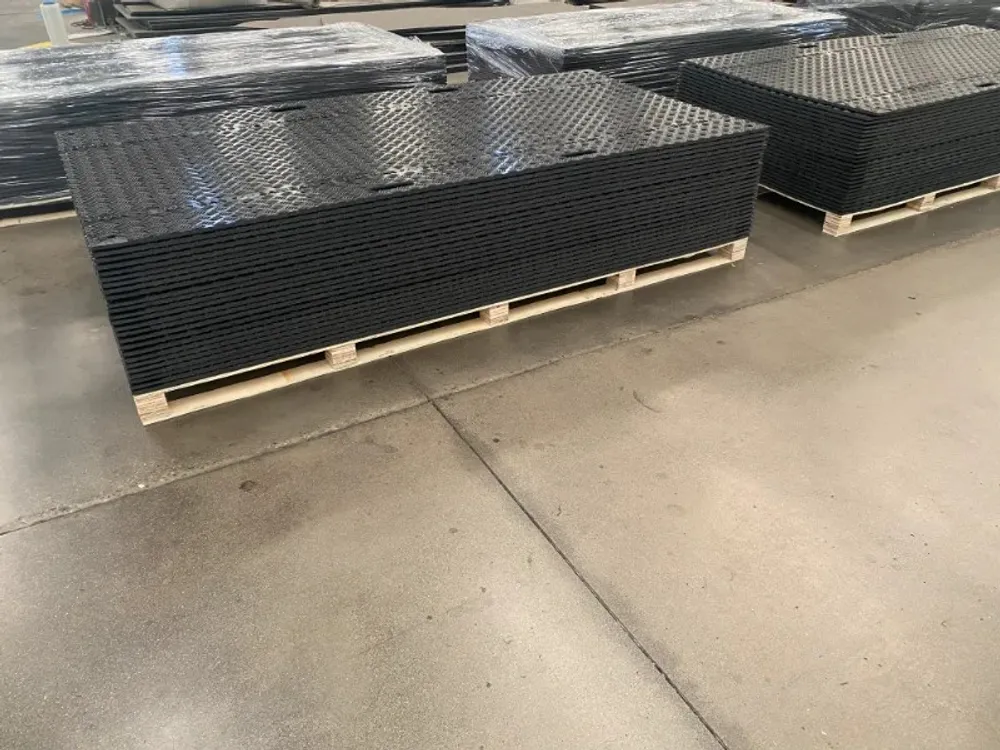
Once the same soft ground is being crossed more than a few times — a site entrance, a field access, a compound in winter — a laid surface is the cheaper answer. HDPE panels spread the wheel load across their full area, link edge to edge into a continuous run, and can be lifted and moved when the route changes. On very soft or waterlogged ground the answer is a wider or longer run rather than a thicker plate, because bearing capacity comes from the soil, not the plastic. The relevant products are our temporary roadway panels for driven routes and standard ground protection mats for lighter access and parking.
Plan the route before laying anything: identify the wettest section, keep the run continuous through it, and pin the panels so turning wheels cannot open gaps between them. Give vehicles a straight approach where possible, because most damage happens where a wheel turns rather than where it rolls. Keep a set of recovery boards in the vehicle anyway — trackway prevents the problem, boards handle the day something drives off the edge of it. The detailed selection logic for panel thickness and load is in the trackway plate buyer's guide.
장비 톤수, 지반 조건, 수량 및 도착항을 알려주시면 1영업일 이내에 회신해 드립니다.
HDPE 진입 매트가 현장 출구에서 트랙아웃 제어를 어떻게 뒷받침하는지 — 타이어를 안정된 표면 위에 두어 공공 도로에 닿는 진흙을 줄이며, FODS와 SWPPP 요건과 함께 작동합니다.
자세히 보기 →
진입로 보호 매트는 폐기물 컨테이너, 납품, 장비의 하중을 분산해 진입로·잔디·블록 포장 진입로가 공사를 흠 없이 통과하게 합니다.
자세히 보기 → 공사 현장 진입 매트는 무른 지반 위에 임시 운반 도로나 작업 플랫폼을 만듭니다 — 골재도, 콘크리트도, 양생 시간도 필요 없습니다.
자세히 보기 →