
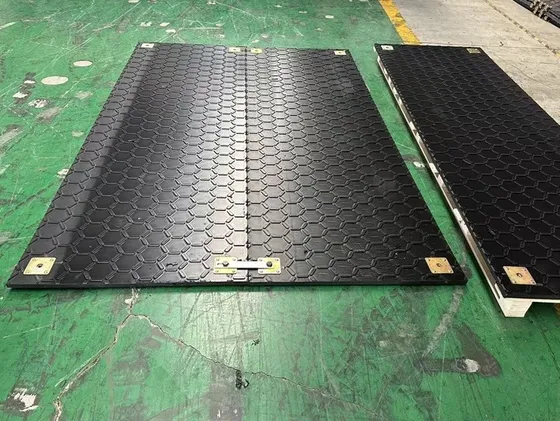
 Proteção de solo
Chapa de Polietileno de Proteção de Solo
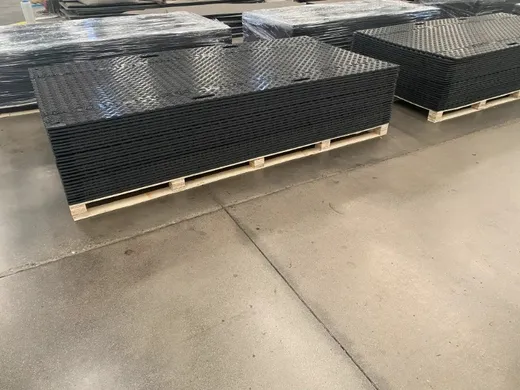
A chapa de polietileno de proteção de solo do dia a dia, em 4×8 ft — placas de polietileno pretas, relevo reversível, portáteis à mão e reutilizáveis por anos.
- 4×8 ft
- 1/2 in
- ~37 kg
2026-08-19 · Equipe Técnica da SIGMA
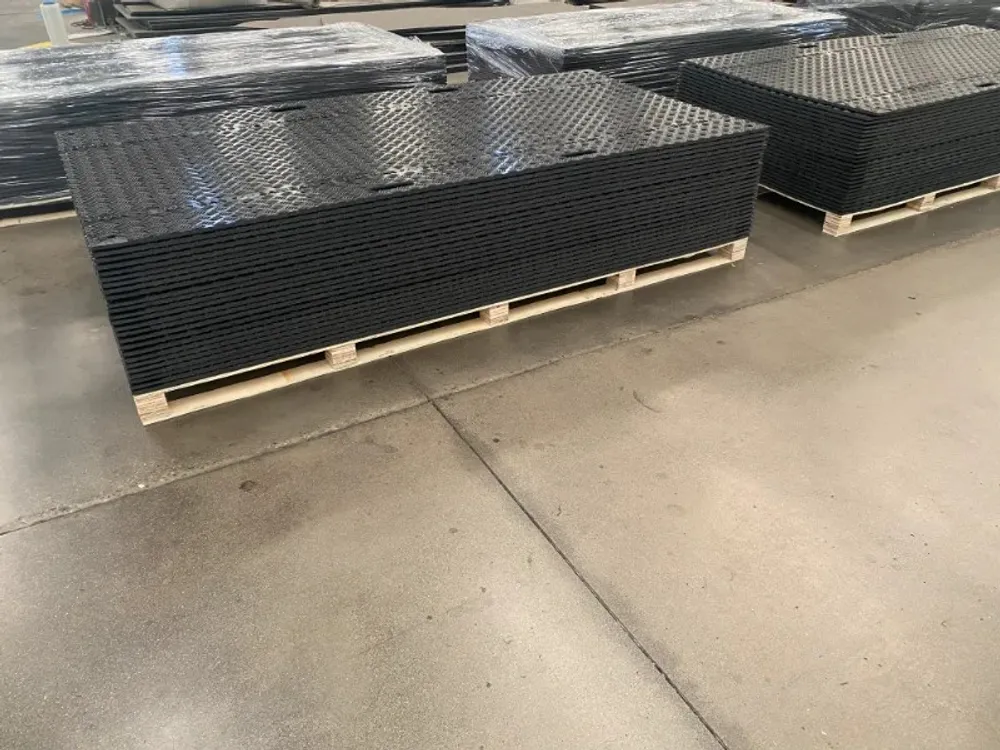
Recovery boards and HDPE trackway solve two different soft-ground problems — one gets a stuck vehicle moving, the other stops it getting stuck. How they compare in mud, sand, and snow, and when to use each.
Soft ground gets dealt with in two ways, and confusing them wastes money. A recovery board — a plaque anti-enlisement in French — is a short, ridged board you wedge under a spinning wheel to regain traction and drive out. Trackway plates are large panels you lay before anything drives, so no wheel ever loses traction in the first place. One is a rescue tool carried in the vehicle; the other is a surface built for the route. A 4x4 crossing a beach needs the first. A site with lorries arriving every day needs the second.
Mud fails by shear: the wheel churns until it is sitting on slurry with no bearing left, so the fix is to spread the load over an area wide enough that the soil below stays intact. Sand fails by flow — grains move out from under the tyre, so what matters is a surface that does not let the wheel dig a bowl. Snow and frozen ground sit somewhere between the two and change through the day as they thaw. A ridged recovery board grips in all three but only across its own short length; a continuous plate run carries a vehicle across the whole soft section, which is why a route that is regularly driven ends up on trackway rather than on boards.
Recovery boards earn their place in vehicle kit: light, cheap, carried permanently, and the fastest way to free a stuck wheel when there is no plant nearby. They are a solution for the occasional crossing and for genuine emergencies. Their limit is exactly what makes them portable — they cover a metre or so of ground, so getting a vehicle across a long soft stretch means leapfrogging boards forward, which is slow and puts a person in the mud beside a moving wheel every time.
Once the same soft ground is being crossed more than a few times — a site entrance, a field access, a compound in winter — a laid surface is the cheaper answer. HDPE panels spread the wheel load across their full area, link edge to edge into a continuous run, and can be lifted and moved when the route changes. On very soft or waterlogged ground the answer is a wider or longer run rather than a thicker plate, because bearing capacity comes from the soil, not the plastic. The relevant products are our temporary roadway panels for driven routes and standard ground protection mats for lighter access and parking.
Plan the route before laying anything: identify the wettest section, keep the run continuous through it, and pin the panels so turning wheels cannot open gaps between them. Give vehicles a straight approach where possible, because most damage happens where a wheel turns rather than where it rolls. Keep a set of recovery boards in the vehicle anyway — trackway prevents the problem, boards handle the day something drives off the edge of it. The detailed selection logic for panel thickness and load is in the trackway plate buyer's guide.
Informe a tonelagem do equipamento, tipo de solo, quantidade e porto de destino — respondemos em 1 dia útil.
Proteção de solo A chapa de polietileno de proteção de solo do dia a dia, em 4×8 ft — placas de polietileno pretas, relevo reversível, portáteis à mão e reutilizáveis por anos.
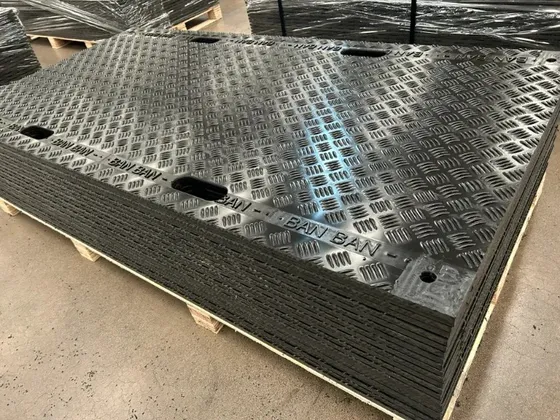 Uso pesado
Chapa de polietileno de 4×8 ft mais espessa e densa, para caminhões carregados, tratores de esteira e escavadeiras.
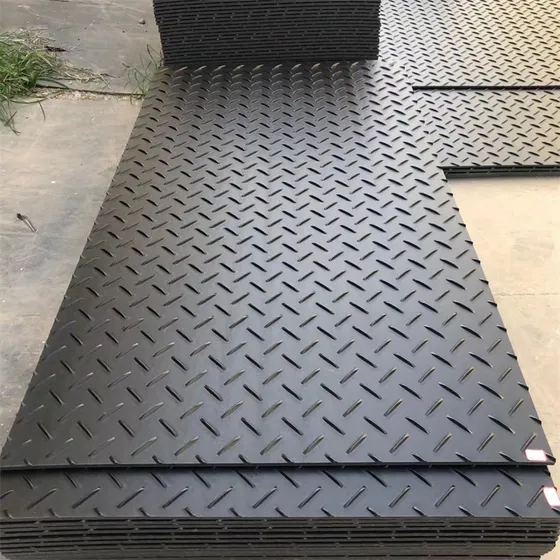 Painéis de via
Piso provisório de grande formato para estradas de acesso pesado instantâneas.
Como as chapas de acesso em PEAD apoiam o controlo de arrasto nas saídas de estaleiro — mantendo os pneus sobre uma superfície estável para que menos lama chegue às vias públicas, a par dos requisitos FODS e SWPPP.
Ler →
As chapas de proteção de acessos distribuem a carga de contentores, entregas e equipamento para que um acesso, relvado ou caminho em pavê passe por uma obra sem marcas.
Ler → As chapas de acesso a estaleiros constroem uma estrada de transporte temporária ou uma plataforma de trabalho em solo mole — sem brita, sem betão, sem tempo de cura.
Ler →