
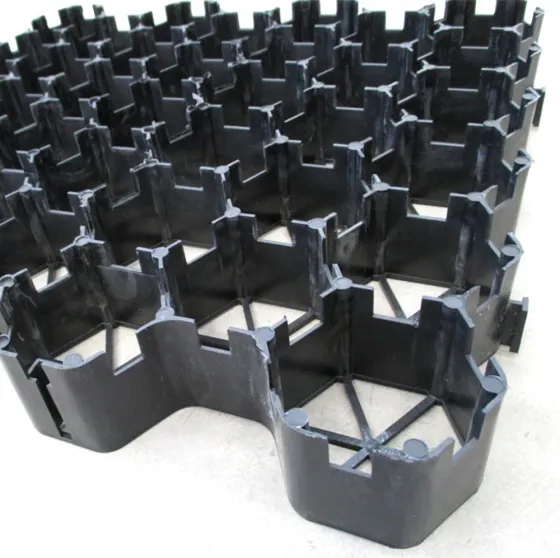
 Grass & Gravel Grids
Gravel Grid
Cellular HDPE gravel grid and grass grid — a permeable ground reinforcement grid that turns grass or gravel into a load-bearing car park or driveway.
- ~500×500 mm
- 38–50 mm cell
- gravel or grass
2026-07-12 · SIGMA Technical Team
HDPE grass grid parking turns an overflow field into a drivable car park without concrete — permeable, load-bearing for cars, and green again the rest of the year.
Overflow and event parking is a recurring problem for venues, churches, sports clubs, and construction sites: extra parking capacity is needed a few days a month, but a full concrete or tarmac car park is expensive, permanent, and mostly empty the rest of the year. Grass grid parking closes that gap. An HDPE grid locks into the lawn, spreads the weight of parked cars across a wide area, and leaves the surface green and permeable — a field that looks like grass most of the time and performs like a car park on the day it is needed. For design inspiration beyond the car park, see modern grass grid paver ideas.
A grass grid panel is a honeycomb of open HDPE cells, filled with topsoil and seeded so roots grow up through roughly 95% of the void space. The plastic ribs do the structural work: they ring-fence each cell so soil cannot spread sideways under a wheel, and they tie into the panels around them so a parked car’s weight is carried across dozens of cells instead of compacting one patch of turf. That is what lets a turf reinforcement grid take repeated car and light-van traffic without the ruts and bare patches unprotected grass gets within a season.
Concrete and tarmac seal the ground; a grass grid does not. Rain passes straight through the open cells into the soil below instead of running off into drains and gutters, which keeps a grass car park off the site’s stormwater calculation and cuts the puddling and flooding a hard-paved overflow area causes after a storm. On sites working to a sustainable drainage requirement, a permeable surface solves the run-off problem the paving itself would otherwise create.
Against poured concrete or tarmac, a grass grid skips the excavation, formwork, and curing time — panels go down on a prepared base and are drivable within days, not weeks. There is no impermeable black or grey surface, no heat build-up on a hot afternoon, and no bare slab sitting empty for eleven months between events. The trade-off is duty class: concrete suits daily, all-weather heavy traffic, while a grass grid suits parking that is intermittent — the handful of days a month a field earns its keep as a car park.
Installation follows the same logic as any load-bearing surface: strip and level the area, add a compacted sub-base sized to the traffic, then lock the grid panels together over it before filling the cells with topsoil and grass seed or, on a firmer working surface, compacted gravel. We cover that build-up step by step in preparing the subbase for grass grid pavers, and the full cost breakdown — grid, sub-base, and fill — in how much grass grid pavers cost.
Overflow parking for churches, stadiums, and festival grounds is the classic use, but the same panels double as fire and emergency access lanes that must stay clear and driveable while looking like lawn the rest of the time. Golf clubs, wedding venues, and school sites choose grass grid parking for the same reason: a field that only carries cars occasionally does not justify a permanent hard-standing car park. Where a section sees near-constant traffic — an entrance lane or a staff parking row — a gravel grid filled with stone instead of turf handles that heavier duty — our gravel fill guide covers that option.
Tell us your equipment tonnage, ground condition, quantity, and destination port — we reply within one business day.
Grass & Gravel Grids Cellular HDPE gravel grid and grass grid — a permeable ground reinforcement grid that turns grass or gravel into a load-bearing car park or driveway.
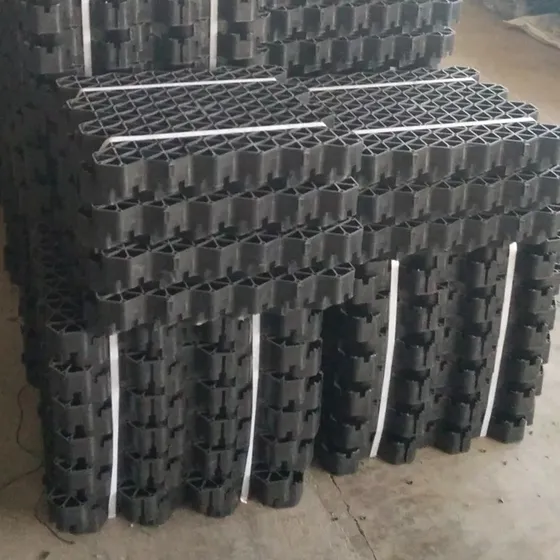 Grass & Gravel Grids
Permeable 500×500 mm HDPE turf reinforcement grid (~95% open cell, 100–150 t/m² filled) where grass roots grow through for load-bearing lawns.
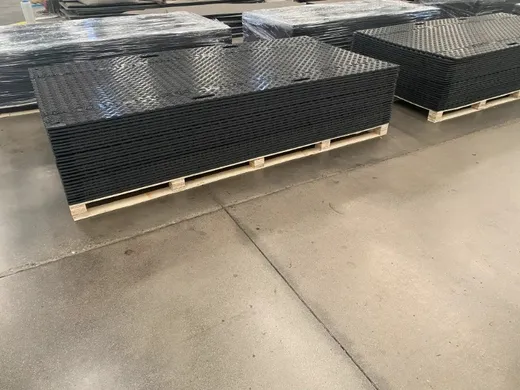
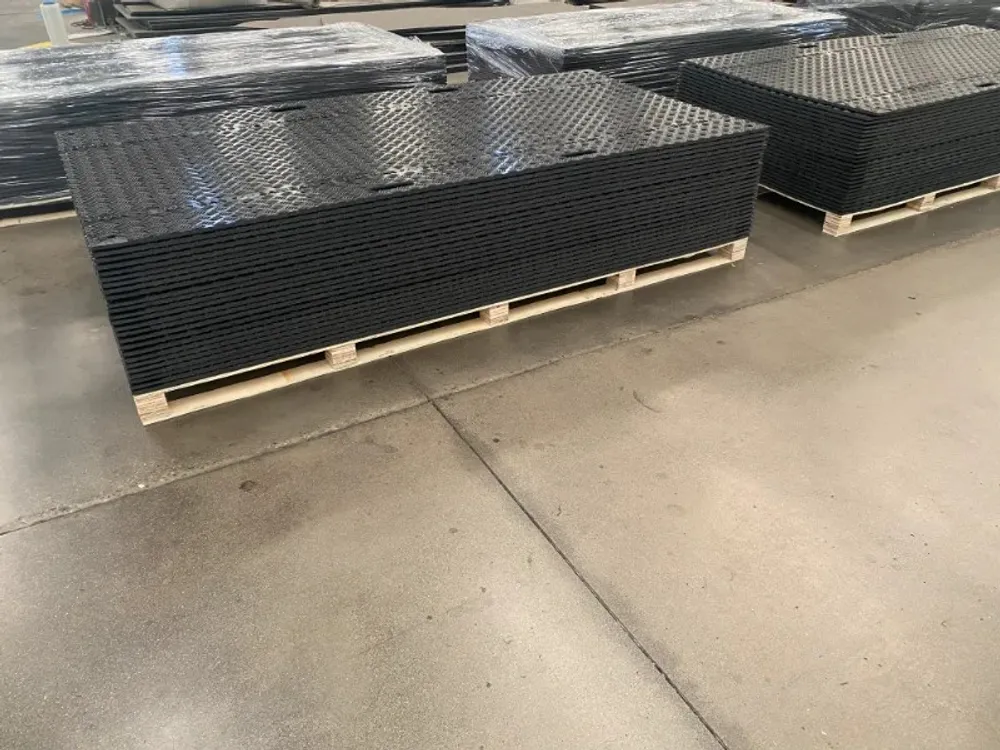
How logging mats hold up a haul road through soft or wet timber ground, how they differ from dragline mats, and how to size HDPE against the machines that will cross them.
Read →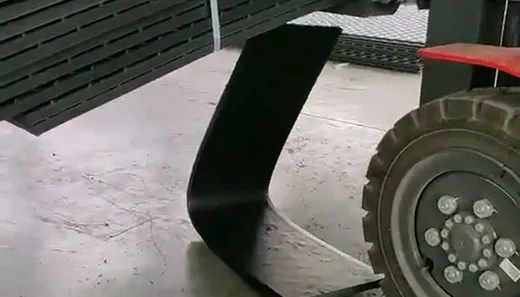
The resin shikiita brands Japanese sites specify most often — Super Ju-Lite, Repi Board, W-Board, Koujiban and Tough Mat — what each is known for, and where a factory-direct HDPE mat fits alongside them.
Read →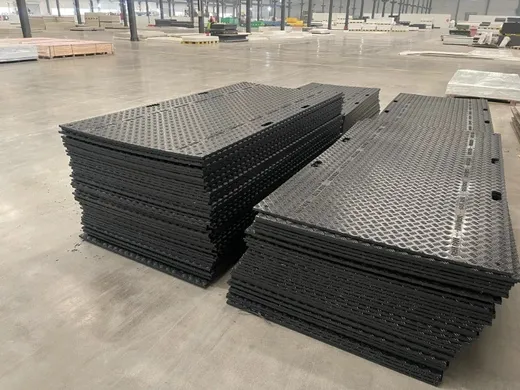
How HDPE ground mats turn grass, gravel, and made-up ground into working parking — when to use solid mats, when a grass grid is the better answer, and how to size for car and van traffic.
Read →