
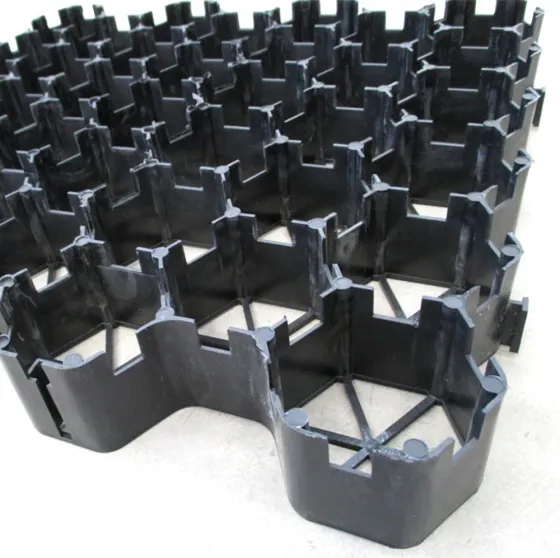
 Grass & Gravel Grids
Gravel Grid
Cellular HDPE gravel grid and grass grid — a permeable ground reinforcement grid that turns grass or gravel into a load-bearing car park or driveway.
- ~500×500 mm
- 38–50 mm cell
- gravel or grass
2026-07-12 · SIGMA Technical Team
What HDPE grass grid pavers actually cost per square metre, what drives the price, and how the full installed job — grid, sub-base, and fill — compares to poured concrete.
Three things move the price of a grass grid job more than anything else: panel thickness and load class, order quantity, and what you fill the cells with. A light-duty turf reinforcement grid rated for cars costs less per square metre than a heavy-duty panel rated for trucks and fire tenders, and a bulk or container-quantity order brings the unit price down well below a small retail top-up order. Fill material matters too — topsoil and grass seed cost less than compacted gravel, but gravel gives a firmer, lower-maintenance surface for a driveway or a fire lane.
HDPE grass grid pavers typically run from a few euros per square metre for standard panels at bulk quantities, rising for heavier load classes and smaller retail orders. That figure is for the grid alone — it does not include the sub-base or fill, which is where a lot of quoted “per m²” prices quietly stop. Get a quote for the full build-up, not just the panel, or the comparison against poured concrete will look better than it actually is.
Interlocking concrete grid pavers do a similar job — cells filled with grass or gravel over a sub-base — but the blocks themselves are heavy, need machinery or a large crew to lay, and crack over time on ground that moves. An HDPE turf reinforcement grid is a fraction of the weight, so two people lay it by hand with no plant hire, and it flexes rather than cracks if the ground settles slightly. The material cost per square metre is often comparable; the difference shows up in installation labour and in a service life measured in years of reuse rather than a single pour.
The number that matters for budgeting is the installed cost, not the panel price: excavation and grading, a compacted sub-base sized to the traffic, the grid panels, and the fill material together. A car park or driveway on reasonable ground needs less sub-base depth than a fire lane rated for a loaded appliance, and that sub-base — not the grid — is usually the bigger line item on the quote. We cover the layer build-up and depths in how to prepare the subbase for grass grid pavers, so you can price the whole job rather than just the panels.
Against poured concrete or block paving, a grass grid avoids the drainage infrastructure a sealed surface requires — gullies, soakaways, or a connection to the stormwater system — because rain still infiltrates through the grid. It also avoids the excavation, formwork, and curing time that add labour cost to a concrete pour. And because HDPE does not rot, rust, or need resurfacing, a well-installed grid keeps its load-bearing capacity for years, so the cost per year of service comes in well below a surface you have to reseal or patch.
A useful quote needs the area in square metres, the traffic it will carry (cars, occasional fire access, or regular heavy vehicles), current ground conditions, and whether you want a grass or gravel fill. For contractors and distributors buying factory direct in volume, we quote by container and can mix load classes in a single order — get in touch with the site area and traffic and we will price the grid, and point you to the sub-base spec that matches it.
Tell us your equipment tonnage, ground condition, quantity, and destination port — we reply within one business day.
Grass & Gravel Grids Cellular HDPE gravel grid and grass grid — a permeable ground reinforcement grid that turns grass or gravel into a load-bearing car park or driveway.
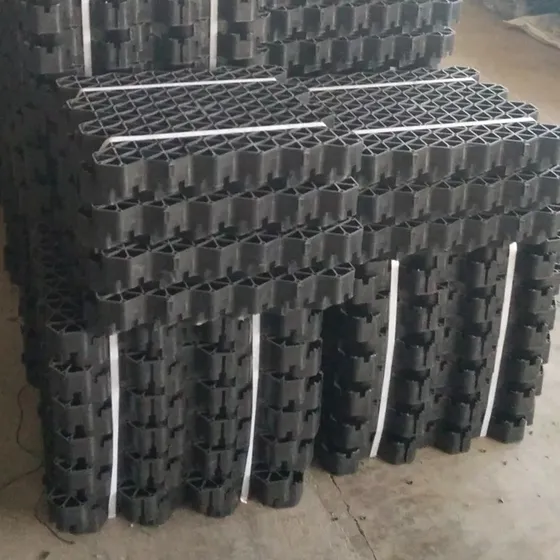 Grass & Gravel Grids
Permeable 500×500 mm HDPE turf reinforcement grid (~95% open cell, 100–150 t/m² filled) where grass roots grow through for load-bearing lawns.
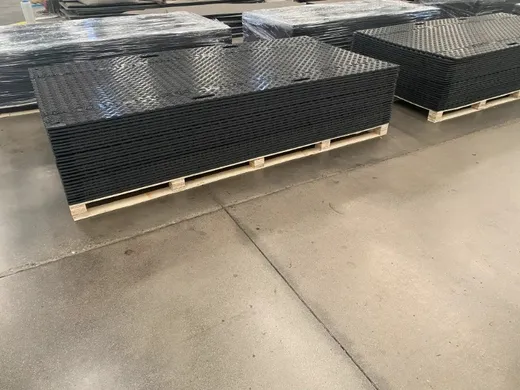
How logging mats hold up a haul road through soft or wet timber ground, how they differ from dragline mats, and how to size HDPE against the machines that will cross them.
Read →
The resin shikiita brands Japanese sites specify most often — Super Ju-Lite, Repi Board, W-Board, Koujiban and Tough Mat — what each is known for, and where a factory-direct HDPE mat fits alongside them.
Read →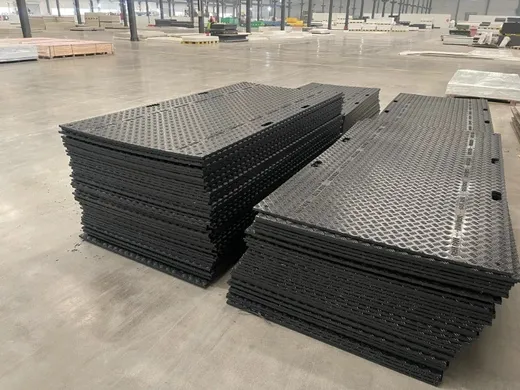
How HDPE ground mats turn grass, gravel, and made-up ground into working parking — when to use solid mats, when a grass grid is the better answer, and how to size for car and van traffic.
Read →