 지반 보호
표준 플라스틱 깔판
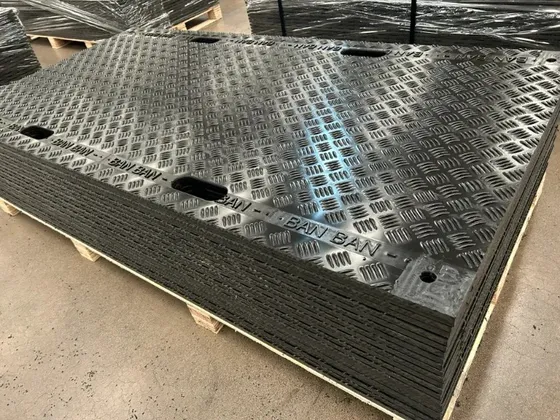
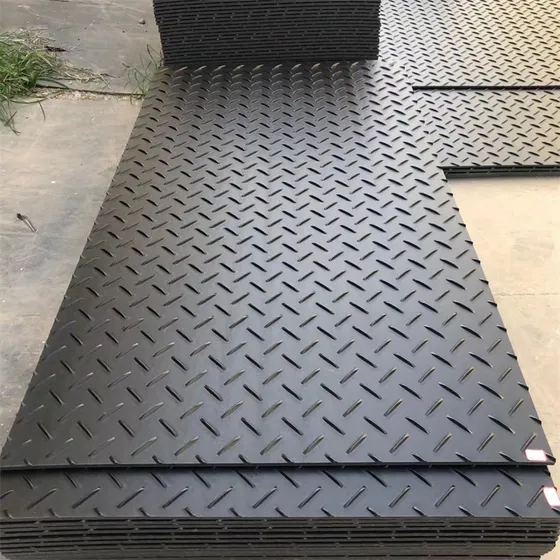
현장에서 가장 널리 쓰이는 4×8 ft 공사용 깔판 — 검정 HDPE 플라스틱 깔판, 양면 트레드, 손으로 운반, 여러 해 재사용.
- 4×8 ft
- 1/2 in
- ~37 kg
2026-08-19 · SIGMA 기술팀
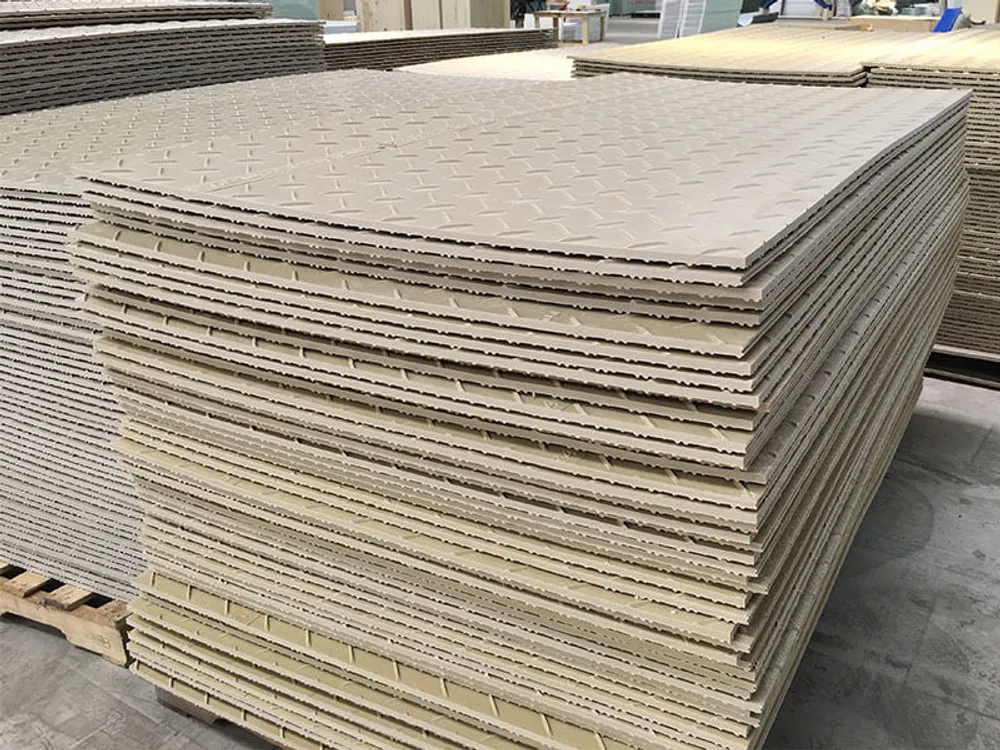
How to choose a plaque de roulage — matching thickness to load, the difference between a car-weight plate and a TP site plate, what drives the price, and why cheap or second-hand plates often cost more.
In French-speaking markets a plaque de roulage is the plate you lay so wheels can cross ground that would otherwise rut, sink, or be damaged — a driveway over a lawn, an access route into a plot, a haul lane across a site. The plate does one thing: it takes the load concentrated under a wheel and spreads it across its whole area before it reaches the soil. Everything else in the specification — thickness, tread, connectors, size — follows from how heavy that wheel is and how many times it crosses.
The first fork in the decision is the vehicle. A private car or a light van crossing a lawn, a verge, or a soft entrance is a modest load spread over four wheels, and a standard-section plate handles it while staying light enough for two people to lay by hand. A tracked excavator, a loaded tipper, or a telehandler is a different problem: concentrated loads, turning tracks, and repeat passes over the same line. Those need a heavy-duty section or a full temporary roadway panel, and the panel weight moves from a hand lift to a machine lift.
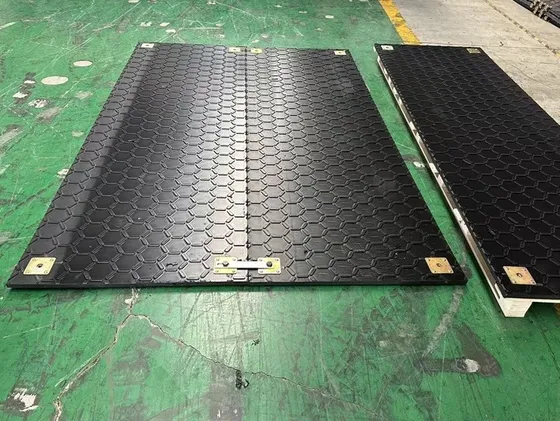
Thickness governs how far the plate spreads a point load before it deflects, so it scales with the heaviest wheel or track load rather than with the total weight of the vehicle. Tread governs grip, and a reversible double-sided pattern lets a worn face be flipped to renew traction and roughly double service life. Connection matters more than buyers expect on a driven route: unpinned plates creep apart under turning wheels and the gaps are where the ground gets damaged, so a continuous run should be linked edge to edge rather than laid loose.
The price of a plate comes down to the material in it — surface area multiplied by thickness — plus the moulding and the quantity ordered. That is why comparing two quotes on headline price alone is misleading: a thinner plate is cheaper per unit and more expensive per year if it is being asked to carry a load it was not sized for. The useful figure is cost per use over the life of the plate, which for a reusable HDPE panel used across many jobs is usually a fraction of the purchase price.
Second-hand plates are attractive on price and often disappointing in service. Polyethylene left in the sun for years loses impact resistance, and the failures show up as cracks propagating from the lifting holes and the corners — exactly where the plate is handled. Used lots also arrive with mismatched thicknesses and missing connecting pins, which turns a continuous roadway back into loose plates. There are cases where a used plate is the right call, mostly one-off short jobs where the plate is effectively disposable, but for a plate that will be reused across projects the total cost usually favours a new panel with a known specification.
For a contractor or hire fleet replacing plates by the container rather than by the pallet, buying direct from the manufacturer removes a layer of distribution cost and opens up specification choices — thickness, colour, moulded logo — that a stocked catalogue cannot offer. The trade-offs are real and worth stating plainly: sea freight lead time and a minimum order quantity. Below a certain volume, local stock wins on convenience; above it, direct supply wins on cost. Our standard plates and heavier sections are made to order in both cases — send the plate size and annual quantity and the comparison takes a day.
장비 톤수, 지반 조건, 수량 및 도착항을 알려주시면 1영업일 이내에 회신해 드립니다.
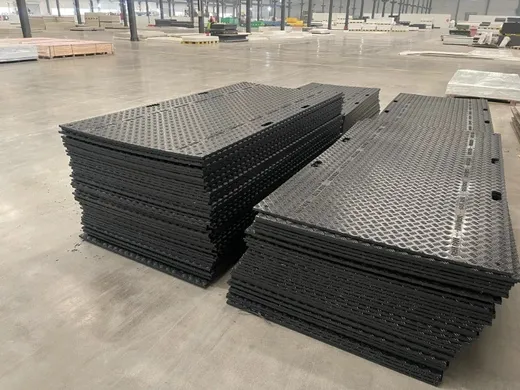
하중 등급에 따라 바닥 보호 매트와 진입 매트를 고르는 실무자용 가이드. 경량·중간·중장비용 HDPE 매트를 하중 범위, 두께, 지반 조건, 대표 용도까지 하나의 비교표로 정리하고, 구매자 체크리스트와 FAQ를 함께 담았습니다.
자세히 보기 →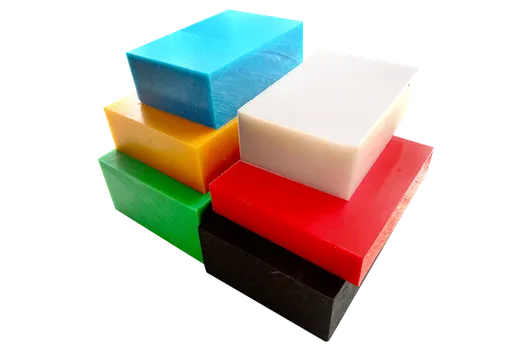
바닥 보호 매트에 관한 임대 보유 차량용 구매자 FAQ — 임대 중 내구성, OEM 브랜딩, 최소 주문 수량(MOQ), 판매·임대용 매트의 배송.
자세히 보기 →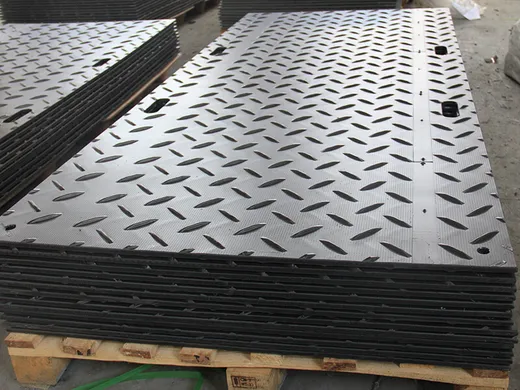
크레인 매트 표준 규격 설명 — 일반적인 패널 크기, 두께와 하중의 관계, HDPE 크레인 매트와 목재의 규격 비교.
자세히 보기 →