
HDPE Mats vs Steel Plates, Plywood, and Timber
2026-05-14 · SIGMA Technical Team
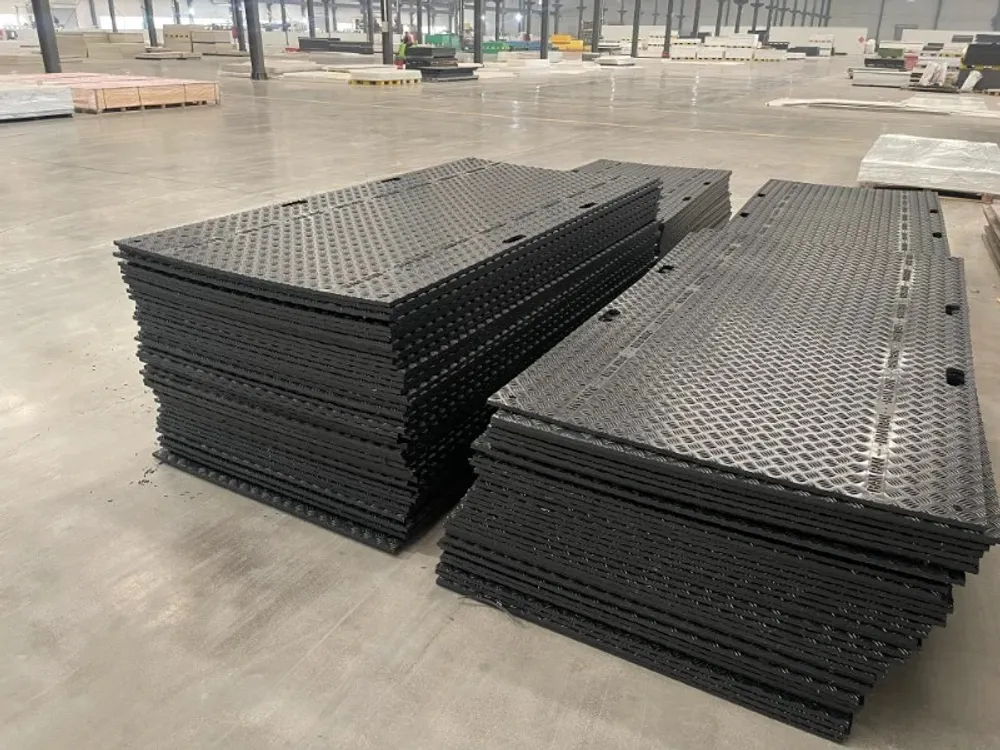
Ground protection mats vs plywood, steel plates, and timber: why contractors switch to HDPE — ~95% lighter than steel, reusable for years, non-conductive, rot-proof.
vs steel road plates
Set ground protection mats against steel plates and the weight gap decides most jobs. HDPE mats are roughly 95% lighter, so a two-person crew lays them by hand with no crane or HIAB. They will not rust and are non-conductive — a real safety margin near buried or overhead cables. Steel still wins for extreme point loads on a hard base, but you pay for it in plant and handling every time you move it.
vs plywood
Comparing ground protection mats vs plywood is really a comparison of single-use against reusable. Plywood is cheap on day one, then soaks up water, delaminates, and rots — often a one-job material. A standard HDPE ground protection mat is reusable for years, so the cost per use on repeat projects drops far below ply once you stop rebuying it every site.
vs timber mats
Timber and hardwood bog mats handle ultra-heavy loads, but they are heavy, splinter, and typically last around three years before rot and insects take hold. An HDPE equivalent gives 10–15 years of clean, splinter-free, rot-proof service and stays the same weight wet or dry — no water absorption to lug around.
Cost per use, not cost per mat
The headline price of plywood or a hired steel plate looks low until you divide by the number of uses. A reusable HDPE mat spreads its cost across years of jobs, recovers clean, and has salvage and recycling value at the end. On any programme with repeat access needs, lifecycle cost is where HDPE wins.
Where each still fits
For most temporary access — light to heavy — HDPE wins on weight, reusability, safety, and lifecycle cost. For a one-off ultra-heavy lift on the very worst ground, a timber or composite bog mat still has a place, and for permanent high point loads on hardstanding, steel does. Pick by the actual load and how many times you will move the surface — the same logic behind how to choose the right ground protection mat.
Need mats for a project like this? Request a quote — we reply within one business day. Or explore the full product range.
Request a QuoteRelated articles
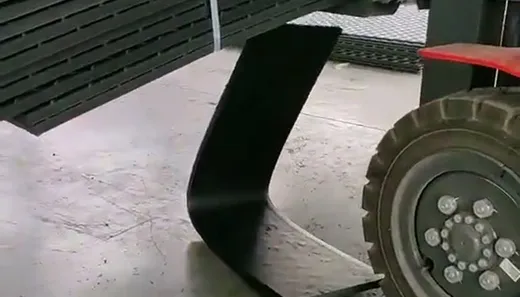
Why HDPE Ground Protection Mats Flex Without Cracking
Lift one HDPE ground protection mat by an edge and it folds into a deep curve, then springs back flat — no cracks, no splinters. Here is why that flex matters on site, and where it stops.
Read →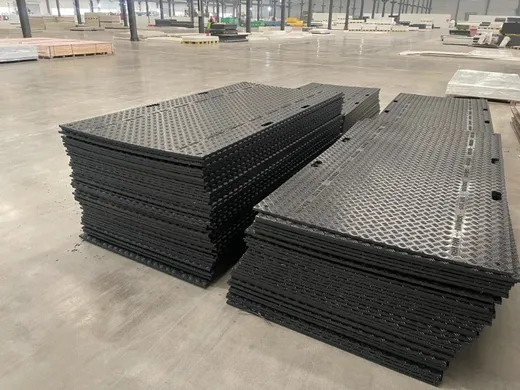
Bog Mats vs Access Mats: What’s the Difference?
Bog mats vs access mats: when you need a large-format bog mat and when a standard access mat will do.
Read →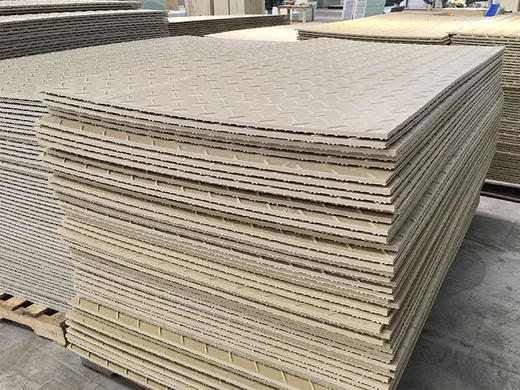
Recycled vs Virgin HDPE for Ground Mats
Recycled vs virgin HDPE mats: how they compare on cost, colour, UV stability, and sustainability — and which to buy for your job.
Read →