
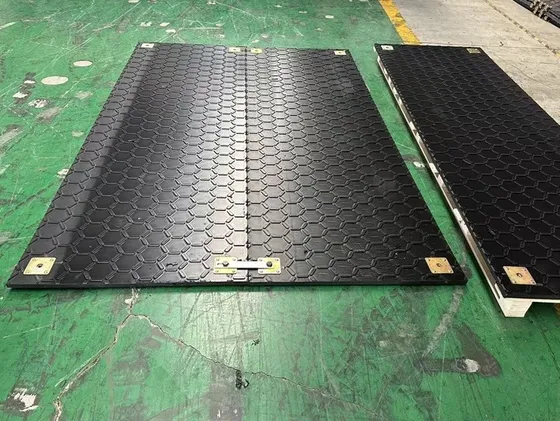
 Ground Protection
Standard Ground Protection Mat
The everyday 4×8 ft HDPE ground protection mat (12.7 mm, ~37 kg, up to 80 t load) — reversible dual-sided tread, two-person hand lift, reusable for years.
- 4×8 ft
- 1/2 in
- ~37 kg
2026-05-28 · SIGMA Technical Team
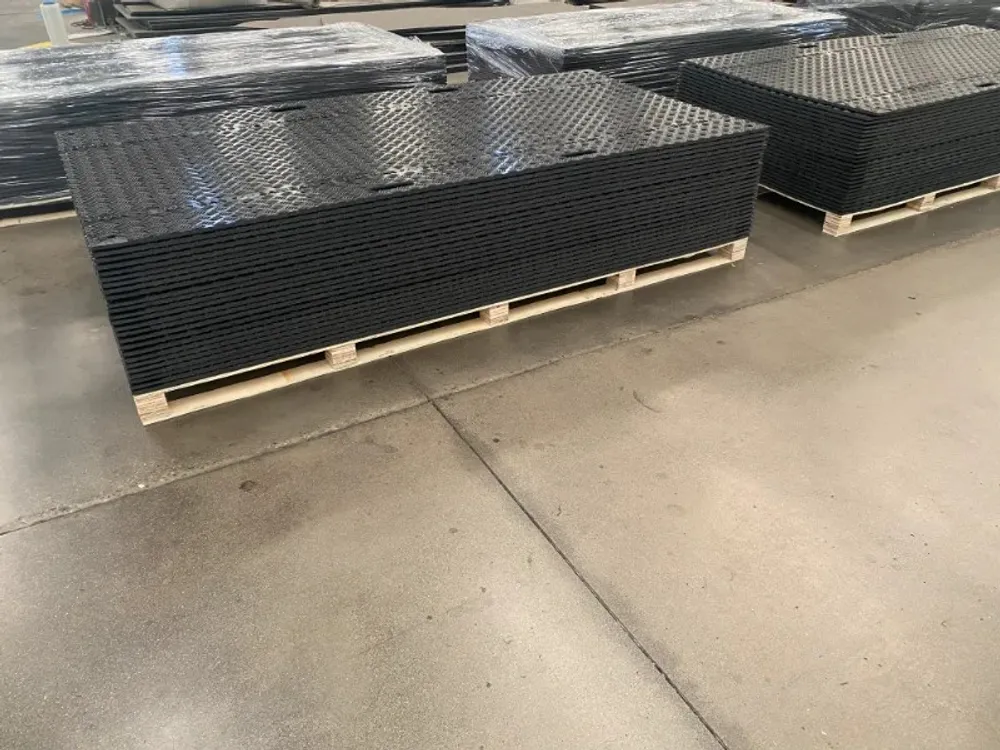
How HDPE access mats support trackout control at site exits — keeping tyres on a stable surface so less mud reaches public roads, alongside FODS and SWPPP requirements.
Trackout is the mud and debris that vehicle tyres and tracks carry off a construction site onto public roads. In the US it is a regulated issue: stormwater pollution prevention plans (SWPPP) and local dust and sediment rules require sites to control it at every exit, and "trackout control mats" is what contractors search for when an inspector flags it. Mud on the carriageway is a safety hazard and a citation waiting to happen.
Let’s be straight about products. The best-known trackout control device is the FODS-style rumble-track — a heavy textured panel that shakes debris off tyres at the exit. We do not make that aggregate-shaker system. What we make is HDPE ground protection and access matting, and it plays a different, complementary role in keeping a site clean: it stops the mud forming in the first place along the routes vehicles drive.
Most trackout starts as churned ground on the internal haul road and around the exit, where wheels spin in wet soil and pick up a load of mud. Lay a run of interlocking access mats or a temporary roadway panel along that route and the tyres stay on a firm, defined surface instead of digging into the dirt. Less mud picked up means less mud to shake off — and less reaching the road.
A stabilised construction entrance usually combines several measures: a defined matted or aggregate exit, a rumble device or wheel wash, and street sweeping as a backstop. HDPE matting is the load-spreading, route-defining part of that system — it keeps the approach to the exit stable so the dedicated trackout device and the road stay cleaner. It is one layer of the plan, not the whole plan.
A heavy-duty ground protection mat carries loaded trucks without rutting, lays and lifts without plant, and recovers clean to redeploy as the exit moves. It is reusable for years, washes down, and is recyclable at end of life — a durable part of a trackout and SWPPP setup rather than a single-use consumable — the reusable-asset case our buyer’s FAQ for rental fleets makes in full. Used this way, matting reduces the mud your other controls have to deal with.
Ground protection mats are not a substitute for a dedicated trackout shaker or a wheel wash where the regulations call for one. They are how you stop the haul route and exit approach turning to mud in the first place, so the whole system works better. If your problem is mud on the public road, fix the ground vehicles drive on — stable construction site access — then add the exit device the site needs.
Tell us your equipment tonnage, ground condition, quantity, and destination port — we reply within one business day.
Ground Protection The everyday 4×8 ft HDPE ground protection mat (12.7 mm, ~37 kg, up to 80 t load) — reversible dual-sided tread, two-person hand lift, reusable for years.
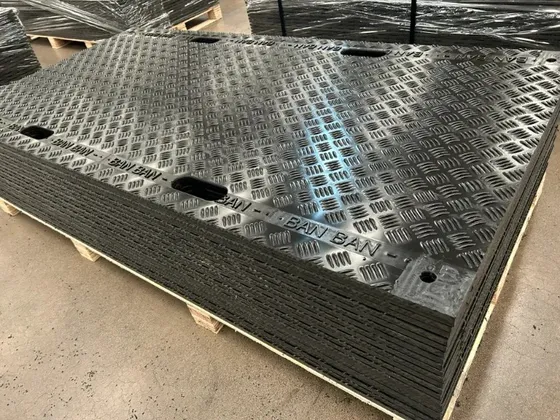 Heavy-Duty
Heavy-duty 4×8 ft HDPE ground protection mats (16–19 mm, ~50 kg) rated up to 120 t spread load for excavators, dozers, and loaded haul trucks.
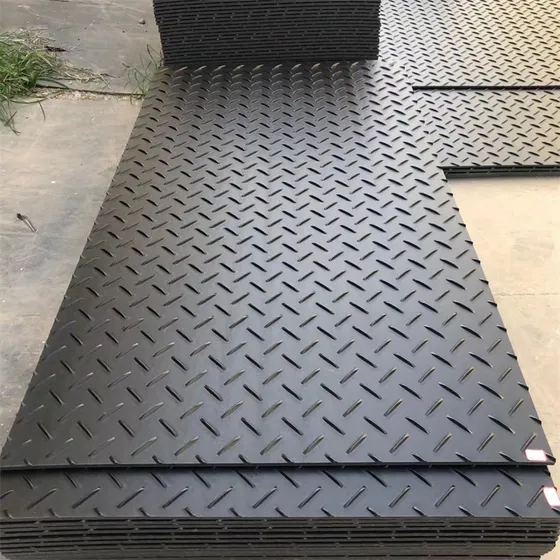 Roadway Panels
Large-format 2×4 m HDPE temporary roadway panels (~385 kg, 828 psi bearing) with overlapping flanges and locking pins for heavy site access roads.
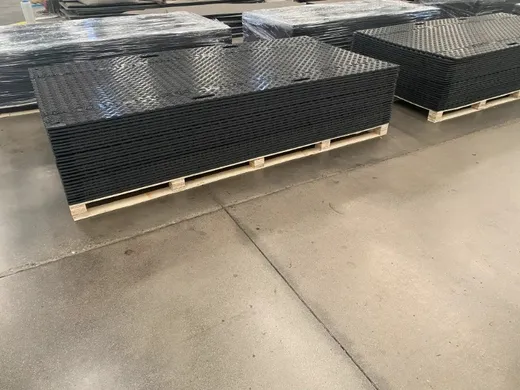
How logging mats hold up a haul road through soft or wet timber ground, how they differ from dragline mats, and how to size HDPE against the machines that will cross them.
Read →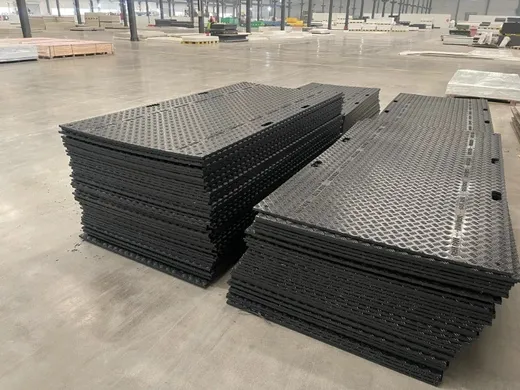
How HDPE ground mats turn grass, gravel, and made-up ground into working parking — when to use solid mats, when a grass grid is the better answer, and how to size for car and van traffic.
Read → Recovery boards and HDPE trackway solve two different soft-ground problems — one gets a stuck vehicle moving, the other stops it getting stuck. How they compare in mud, sand, and snow, and when to use each.
Read →